One of the biggest advantages of an EEE degree is the combination of electrical and electronics knowledge. This allows graduates to explore both core engineering roles and emerging technology sectors.
If you have recently completed your B.Tech in Electrical and Electronics Engineering and are wondering what to do next, this guide will help you understand the major career paths available.
What Can You Do After B.Tech in Electrical & Electronics Engineering?
After completing B.Tech EEE, graduates can choose from several career paths depending on their interests, technical skills and long-term goals.
Some of the major options include:
- Core electrical engineering jobs
- Power generation, transmission and distribution
- Electrical design and engineering
- Industrial automation and control systems
- Electronics and embedded systems
- Renewable energy
- Electric vehicle and EV technology
- Government and PSU jobs
- Private-sector engineering jobs
- GCC and international opportunities
- Higher studies
- Competitive examinations
- Entrepreneurship and technical services
Let's look at these opportunities in detail.
1. Core Electrical Engineering Careers
Core electrical engineering continues to be one of the most important career paths for EEE graduates.
Electrical engineers are required in industries that design, install, operate and maintain electrical systems and equipment.
Possible roles include:
- Electrical Engineer
- Electrical Design Engineer
- Electrical Project Engineer
- Maintenance Engineer
- Testing and Commissioning Engineer
- Site Electrical Engineer
- Power Systems Engineer
- Electrical Estimation Engineer
These professionals can work in construction companies, manufacturing industries, infrastructure projects, power companies and engineering consultancies.
2. Power Generation, Transmission and Distribution
The power sector offers opportunities in generation, transmission and distribution.
Graduates can build careers in areas such as:
- Power generation plants
- Transmission systems
- Distribution networks
- Substations
- Protection systems
- Electrical maintenance
- Power system operations
- Energy management
Electricity utilities, engineering companies and infrastructure organizations require skilled electrical engineers for these activities.
For students interested in the power sector, strong knowledge of electrical machines, power systems, protection, control systems and electrical measurements can be particularly useful.
3. Government and PSU Jobs
Government and public-sector organizations are another important career option for Electrical and Electronics Engineering graduates.
Depending on the recruitment requirements, EEE graduates may find opportunities through:
- Central government technical recruitment
- State government technical recruitment
- Electricity boards and utilities
- Public Sector Undertakings (PSUs)
- Engineering services examinations
- Other technical competitive examinations
Recruitment methods and eligibility requirements vary between organizations and positions. Therefore, candidates should always check the latest official notification before applying.
Competitive exams can be highly competitive, making systematic preparation and regular practice important.
4. Electronics and Embedded Systems
Although EEE is traditionally associated with electrical engineering, the electronics component of the degree can also lead to technology-oriented careers.
Graduates with additional skills in electronics and programming can explore areas such as:
- Embedded systems
- Microcontrollers
- PCB design
- Electronics testing
- Hardware development
- IoT
- Firmware development
- Industrial electronics
Learning programming languages and platforms such as C, C++, Python and microcontroller technologies can help graduates move towards electronics and embedded careers.
5. Industrial Automation and Control Systems
Automation is an important area where electrical, electronics and control engineering come together.
EEE graduates can explore careers involving:
- PLC programming
- SCADA
- Industrial control systems
- Robotics
- Instrumentation
- Process automation
- Motor control
- Industrial networking
Manufacturing plants, process industries and automation companies require engineers who understand both electrical systems and automation technologies.
Developing practical knowledge of PLCs, SCADA, sensors and industrial control systems can improve career opportunities in this area.
6. Renewable Energy Careers
The growth of renewable energy has created new opportunities for electrical engineers.
Solar and wind energy projects require engineers for system design, installation, operation, testing and maintenance.
Potential roles include:
- Solar Design Engineer
- Solar Project Engineer
- Renewable Energy Engineer
- Electrical Design Engineer
- Operation and Maintenance Engineer
- Energy Management Engineer
EEE graduates interested in renewable energy can also develop additional knowledge in solar PV systems, energy storage, power electronics and grid integration.
7. Electric Vehicle and EV Technology
Electric mobility is another growing field for electrical and electronics engineers.
EV technology combines several areas of engineering, including:
- Electric motors
- Power electronics
- Battery systems
- Battery management systems
- Vehicle control systems
- Charging infrastructure
- Energy management
Graduates can explore opportunities in EV manufacturing, charging infrastructure, battery technology and automotive engineering.
Developing knowledge of power electronics, motor drives, batteries and embedded systems can be useful for engineers interested in this sector.
8. Private Sector Engineering Jobs
EEE graduates can also find opportunities in the private sector across multiple industries.
Some common areas include:
- Manufacturing
- Construction
- Infrastructure
- Power and energy
- Automation
- Electronics
- Renewable energy
- Automotive
- Engineering consultancy
- Facility management
Job titles and responsibilities can vary significantly between companies. Therefore, students should focus not only on their degree but also on developing practical and industry-relevant skills.
9. Career Opportunities in the GCC
The Gulf region is another career destination considered by many engineering graduates.
Countries such as the UAE, Saudi Arabia, Qatar, Oman, Kuwait and Bahrain have opportunities across construction, infrastructure, MEP, power, industrial projects, oil and gas, automation and facility management.
Depending on experience and specialization, electrical engineers may work as:
- Electrical Engineer
- MEP Electrical Engineer
- Electrical Design Engineer
- Electrical Project Engineer
- Testing and Commissioning Engineer
- Maintenance Engineer
- Electrical Site Engineer
For engineers targeting GCC opportunities, practical experience, technical knowledge, relevant software skills and strong communication can be important.
10. Higher Studies After B.Tech
Higher education is another option after completing B.Tech.
Students can consider:
M.Tech
An M.Tech can help graduates specialize in areas such as:
- Power Systems
- Power Electronics
- Control Systems
- Renewable Energy
- VLSI
- Embedded Systems
- Electrical Machines
MBA
Students interested in management, business development, operations or entrepreneurship may consider an MBA.
Specialized Certifications
Short-term technical courses can also help engineers build specific skills in areas such as:
- PLC and SCADA
- AutoCAD Electrical
- ETAP
- MATLAB
- Embedded systems
- Solar PV design
- Industrial automation
The right choice depends on the student's career goals.
11. Competitive Exams After B.Tech EEE
Many EEE graduates choose competitive examinations for government and technical career opportunities.
Depending on eligibility and recruitment notifications, students may prepare for examinations such as:
- GATE
- Engineering Services Examination
- State electricity board examinations
- Other central and state technical recruitment exams
- Technical examinations conducted by various organizations
The syllabus and eligibility criteria differ from one examination to another.
A good preparation strategy generally includes understanding the syllabus, studying fundamental concepts, solving previous-year questions and taking regular mock tests.
12. Skills EEE Graduates Should Develop
A B.Tech degree provides the foundation, but practical and technical skills can make a significant difference when looking for employment.
Important skills can include:
Core Electrical Knowledge
Build a strong understanding of:
- Electrical Machines
- Power Systems
- Power Electronics
- Control Systems
- Electrical Measurements
- Circuit Theory
- Protection
- Digital and Analog Electronics
Software Skills
Depending on your career goal, useful tools may include:
- MATLAB
- ETAP
- AutoCAD
- PLC/SCADA platforms
- Simulation tools
- Embedded development tools
Programming
Basic programming knowledge can be valuable, particularly for electronics, automation and embedded careers.
Python, C and C++ are commonly useful depending on the specialization.
Communication Skills
Technical knowledge alone may not be enough. Good communication, documentation and interview skills can also help engineers progress in their careers.
13. How to Choose the Right Career Path?
There is no single career path that is best for every EEE graduate.
Your choice should depend on your interests and long-term goals.
For example:
Interested in power and electrical systems?
Consider power generation, transmission, distribution, electrical design and maintenance.
Interested in electronics and technology?
Explore embedded systems, IoT, electronics design and hardware development.
Interested in automation?
Consider PLC, SCADA, robotics and industrial control systems.
Interested in government jobs?
Focus on relevant competitive examinations and technical recruitment.
Interested in international opportunities?
Develop practical experience and technical skills relevant to GCC and international engineering projects.
Interested in higher education?
Consider M.Tech, MBA or a specialized technical qualification based on your career goal.
14. Start Preparing While You Are Still a Student
One of the biggest mistakes students make is waiting until graduation to start thinking about their career.
You can start preparing during your B.Tech itself.
Build your fundamentals, practice technical questions, work on projects and develop relevant software and communication skills.
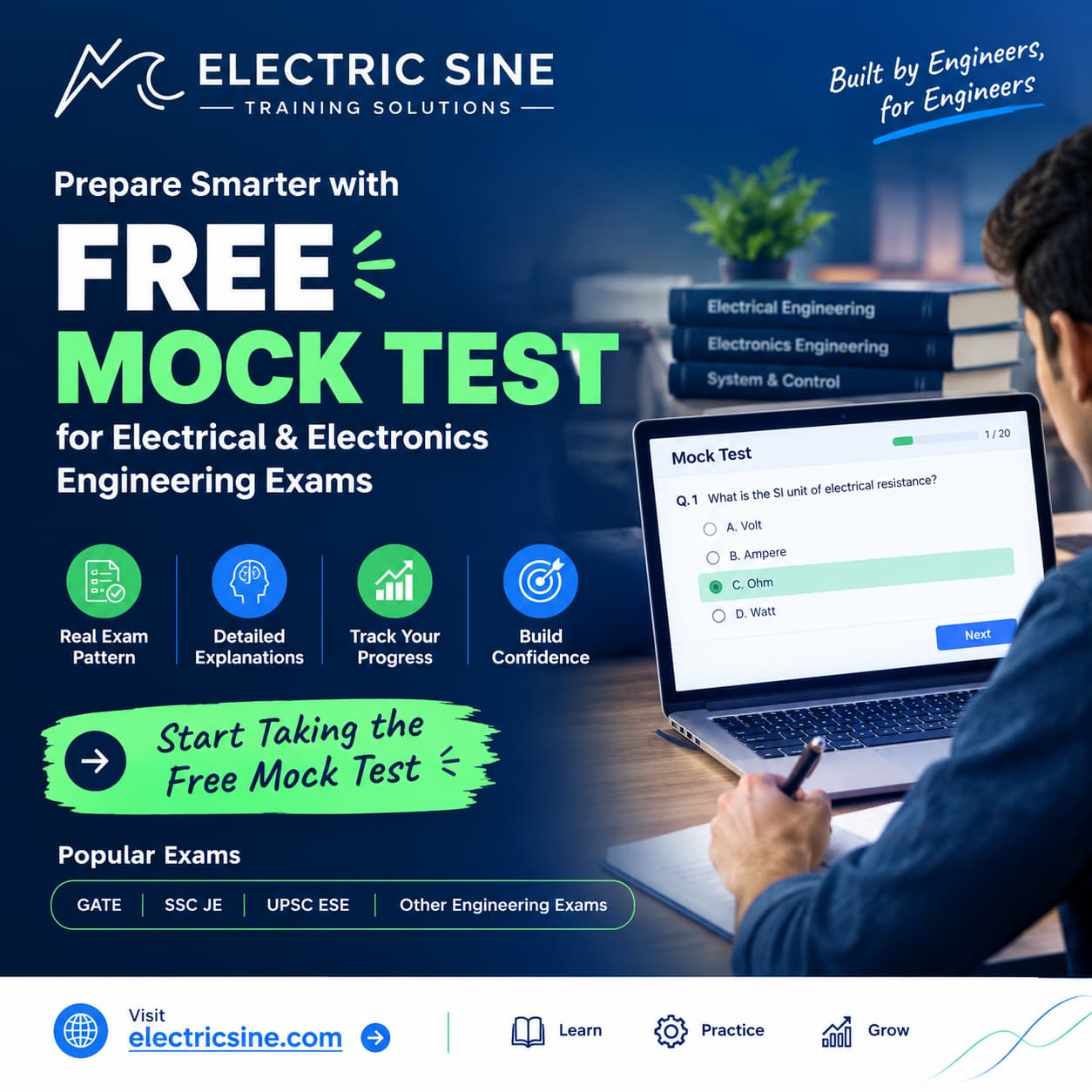
If you are preparing for competitive examinations, regular MCQ practice and mock tests can help you identify weak areas and improve your speed and accuracy.
How ElectricSine Can Help EEE Students
ElectricSine provides online learning and exam-preparation resources for Electrical, Electronics and Instrumentation engineering students and graduates.
Students can use the platform to:
- Practice engineering MCQs
- Take online mock tests
- Revise important concepts
- Work with question banks
- Practice previous questions
- Prepare for competitive examinations
- Track performance and identify areas for improvement
Whether your goal is a government technical job, a core engineering career, higher studies or an international engineering opportunity, consistent preparation can help you move closer to your career goal.
Conclusion
A B.Tech in Electrical and Electronics Engineering does not limit you to a single career.
From power systems and electrical design to electronics, automation, renewable energy, electric vehicles, government jobs, higher studies and international opportunities, there are many paths available.
The key is to identify the area that matches your interests, build the right technical skills and start preparing early.
For competitive examinations, combine strong conceptual knowledge with regular MCQ practice, previous-year questions and mock tests. This can help you become more confident and better prepared for the opportunities ahead.
Explore ElectricSine to practice Electrical, Electronics and Instrumentation engineering questions and prepare for your next examination.