Knowledge Base

Study smarter,
score higher.

Guides, strategies and deep dives from exam toppers and certified coaches — all in one place.

image

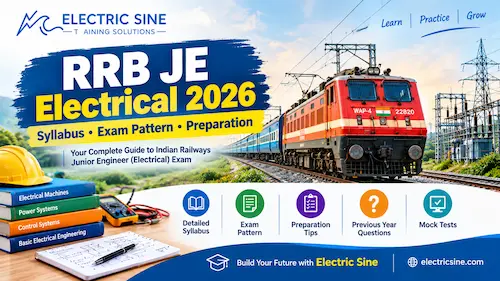
RRB JE Electrical 2026: Syllabus, Exam Pattern, Eligibility and Preparation Guide

Are you an Electrical Engineering diploma holder or graduate looking for a government job in Indian Railways? The RRB JE Electrical exam is an important opportunity worth preparing for.

Every year, many engineering aspirants aim to join Indian Railways as Junior Engineers. However, preparing for a competitive examination requires more than reading textbooks. You need to understand the syllabus, identify important topics, practice technical questions and develop a study routine that works for you.

If you are planning to prepare for the RRB Junior Engineer Electrical examination, this guide will help you understand the exam pattern, eligibility, technical syllabus and practical preparation strategies.

What Is RRB JE Electrical?

RRB JE stands for Railway Recruitment Board Junior Engineer. It is a recruitment examination conducted by Railway Recruitment Boards to select candidates for technical positions in Indian Railways.

Electrical Junior Engineers may work in areas such as railway electrical installations, traction systems, power distribution, maintenance and other electrical engineering operations, depending on their assigned department.

The position offers engineering graduates and diploma holders an opportunity to apply their technical knowledge in one of India's largest railway networks.

RRB JE Electrical 2026 – Exam Overview

ParticularsDetails
ExaminationRRB Junior Engineer
Recruiting AuthorityRailway Recruitment Boards
DepartmentIndian Railways
Job TypeCentral Government
QualificationRelevant Engineering Diploma or Degree
Selection ProcessCBT 1, CBT 2, Document Verification and Medical Examination
Examination ModeComputer-Based Test
Negative Marking1/3 mark for each incorrect answer
Official WebsiteRegional RRB websites

Important update: The RRB JE recruitment under CEN 05/2025 included CBT 1 in February 2026 and CBT 2 in July 2026. Candidates should follow official RRB announcements for the next recruitment cycle rather than assuming that a new 2026 application window is open.

RRB JE Electrical Eligibility Criteria

Before starting your preparation, it is important to understand whether you meet the required eligibility conditions.

Educational Qualification

Candidates generally need a relevant three-year engineering diploma or engineering degree from a recognized institution.

For Electrical Engineering positions, the accepted qualifications depend on the specific post and engineering discipline mentioned in the recruitment notification.

Candidates with qualifications in Electrical Engineering or eligible related disciplines should carefully check the post-wise requirements before applying.

Age Limit

The age limit is specified in each Centralised Employment Notice. Relaxations may be available for eligible reserved categories according to government rules.

Always refer to the relevant official notification for the applicable age range and qualification requirements.

RRB JE Electrical Exam Pattern

The RRB JE selection process includes two computer-based examinations: CBT 1 and CBT 2.

Understanding the difference between these examinations can help you plan your preparation more effectively.

RRB JE CBT 1 Exam Pattern

CBT 1 tests general aptitude, reasoning, awareness and basic science.

SubjectQuestionsMarks
Mathematics3030
General Intelligence and Reasoning2525
General Awareness1515
General Science3030
Total100100

Exam Duration: 90 minutes

CBT 1 is primarily a screening examination. Its normalized score is used for shortlisting candidates for CBT 2.

A common mistake among technical students is to concentrate only on engineering subjects. However, mathematics, reasoning and general science are equally important for clearing the first stage.

RRB JE CBT 2 Exam Pattern

CBT 2 focuses more heavily on technical knowledge.

SubjectQuestionsMarks
General Awareness1515
Physics and Chemistry1515
Basics of Computers and Applications1010
Basics of Environment and Pollution Control1010
Technical Abilities100100
Total150150

Exam Duration: 120 minutes

Technical Abilities account for 100 out of 150 marks. This makes Electrical Engineering subject preparation especially important.

The above examination structure follows RRB CEN 05/2025. Future notifications may introduce changes.

RRB JE Electrical Syllabus – Important Technical Subjects

The Electrical Engineering technical syllabus covers several subjects studied during diploma and degree programmes.

Here are the major areas candidates should focus on.

1. Basic Electrical Engineering

Basic Electrical Engineering provides the foundation for understanding more advanced electrical concepts.

Important topics include:

  • Ohm's Law and Kirchhoff's Laws
  • Resistance, capacitance and inductance
  • Series and parallel circuits
  • AC and DC fundamentals
  • Electrical power and energy
  • Power factor and basic circuit calculations

Make sure you understand the concepts behind formulas instead of memorizing equations alone.

2. Electrical Machines

Electrical Machines is an important subject for Railway JE Electrical preparation.

Focus on:

  • DC generators and motors
  • Single-phase and three-phase transformers
  • Three-phase induction motors
  • Synchronous machines
  • Motor starting methods
  • Efficiency and losses
  • Speed control of electrical machines

Practice numerical problems related to transformers, motors and machine efficiency.

3. Power Systems

Power Systems deals with the generation, transmission and distribution of electrical energy.

Important areas include:

  • Electrical power generation
  • Transmission and distribution systems
  • Substations
  • Switchgear and protection
  • Circuit breakers and protective relays
  • Earthing and electrical safety
  • Power factor improvement

Understanding the practical applications of power systems can make these topics easier to remember.

4. Electrical Measurements and Instruments

Measurement-related questions test your understanding of electrical instruments and their applications.

Topics include:

  • Ammeters and voltmeters
  • Wattmeters and energy meters
  • Measuring instruments
  • Measurement errors
  • Instrument transformers
  • Bridges and measurement techniques

Try to understand how each instrument works and where it is used.

5. Basic Electronics

Electrical engineers should also have a good understanding of fundamental electronics.

Prepare topics such as:

  • Semiconductor fundamentals
  • Diodes and rectifiers
  • Transistors
  • Electronic circuits
  • Digital electronics fundamentals
  • Basic electronic devices and applications

6. Power Electronics

Power Electronics connects electrical machines, control and electronic switching devices.

Important topics include:

  • SCR and other power semiconductor devices
  • Rectifiers
  • Inverters
  • Choppers
  • Converters
  • Applications of power electronic circuits

7. Electrical Utilization, Estimation and Safety

These topics are useful for understanding the practical side of electrical engineering.

Focus on:

  • Electrical heating
  • Electric traction
  • Illumination
  • Electrical drives
  • Wiring systems
  • Estimation and costing
  • Electrical safety practices

Preparation tip: Use the detailed Electrical and Allied Engineering syllabus in the official RRB notification as your final checklist. The subjects above are a preparation-friendly summary, not a replacement for the official syllabus.

How to Prepare for RRB JE Electrical Effectively

Preparing for a competitive examination can feel difficult when the syllabus covers multiple technical subjects. A simple and consistent study strategy can make the process more manageable.

Step 1: Understand the Complete Syllabus

Start by reviewing the official syllabus for CBT 1 and CBT 2.

Divide the topics into three groups:

  • Subjects you already understand well
  • Subjects that require revision
  • Subjects you need to learn from the beginning

This helps you spend more time on areas where improvement is needed.

Step 2: Strengthen Your Electrical Engineering Fundamentals

Electrical Machines, Basic Electrical Engineering, Power Systems and Measurements are useful starting points.

Focus on understanding concepts, solving numerical problems and reviewing formulas regularly.

Step 3: Practice Multiple-Choice Questions

Reading alone is not enough for competitive exam preparation.

After completing a topic, solve practice questions to check your understanding.

For example, after studying transformers, practice questions on efficiency, losses, voltage regulation and transformer operation.

This helps you identify mistakes before moving to the next subject.

Step 4: Solve Previous Year Questions

RRB JE Electrical previous year questions can help you become familiar with the examination style and the level of technical understanding required.

While reviewing previous papers, pay attention to the concepts being tested rather than expecting the same questions to appear again.

Step 5: Attempt Online Mock Tests

Mock tests are a useful way to prepare for computer-based examinations.

They help you:

  • Improve question-solving speed
  • Practice time management
  • Identify weak subjects
  • Reduce avoidable mistakes
  • Build confidence with exam-style questions

After every mock test, review your incorrect answers and revise the related concepts.

RRB JE Electrical – Sample Practice Questions

Here are a few original practice questions based on fundamental Electrical Engineering concepts.

Question 1: What is the synchronous speed of a four-pole induction motor operating at 50 Hz?

A. 750 RPM
B. 1000 RPM
C. 1500 RPM
D. 3000 RPM

Correct Answer: C. 1500 RPM

Explanation:

Synchronous Speed = 120 Ɨ Frequency / Number of Poles

= 120 Ɨ 50 / 4 = 1500 RPM

Question 2: Which device is commonly used to improve the power factor of an inductive electrical load?

A. Fuse
B. Capacitor bank
C. Circuit breaker
D. Isolator

Correct Answer: B. Capacitor bank

Explanation:

Capacitor banks provide leading reactive power, helping compensate for the lagging reactive power drawn by inductive loads.

Question 3: What is the main function of a transformer?

A. Convert AC into DC
B. Change the frequency of AC
C. Transfer electrical energy between circuits through electromagnetic induction
D. Convert electrical energy into mechanical energy

Correct Answer: C. Transfer electrical energy between circuits through electromagnetic induction

Explanation:

A transformer transfers electrical energy between circuits using electromagnetic induction, generally without changing the supply frequency.

These are illustrative practice questions, not claimed to be questions from an official RRB previous-year paper.

RRB JE Electrical – 30-Day Preparation Plan

A structured study plan can help candidates revise important concepts and develop a regular practice habit.

DaysPreparation Focus
Day 1–5Basic Electrical Engineering and circuit fundamentals
Day 6–10Electrical Machines
Day 11–15Power Systems and Protection
Day 16–20Measurements, Electronics and Power Electronics
Day 21–24Electrical Utilization, Safety and remaining technical topics
Day 25–27CBT 1 aptitude, reasoning, science and general awareness revision
Day 28–30Mock tests, formula revision and weak-topic improvement

This is a revision-oriented plan. Beginners may need a longer preparation period, and CBT 1 subjects should also be practiced regularly throughout the month.

Why Mock Tests Matter for RRB JE Electrical Preparation

Many candidates understand engineering concepts but struggle to answer questions within the examination time limit.

This is where regular mock test practice becomes valuable.

A good mock test routine should include timed questions, answer reviews and explanations that help you understand why an answer is correct.

Instead of attempting many tests without reviewing them, focus on learning from every test.

At Electric Sine, electrical engineering learners can explore technical practice questions and exam preparation resources designed to support concept-based learning.

Whether you are revising Electrical Machines, improving your circuit knowledge or preparing for government engineering examinations, consistent practice can help you move forward.

Explore Electrical Engineering Practice Questions and Mock Tests at Electric Sine.

Frequently Asked Questions About RRB JE Electrical

1. Can Electrical Engineering diploma holders apply for RRB JE?

Yes. Candidates with a relevant engineering diploma may be eligible for Electrical JE posts, subject to the qualifications specified in the official recruitment notification.

2. Is RRB JE Electrical difficult?

The examination is competitive, but preparation becomes more manageable when candidates understand the syllabus, revise engineering fundamentals and practice regularly.

3. Is there negative marking in RRB JE?

Yes. Under CEN 05/2025, one-third of the marks assigned to a question are deducted for each incorrect answer.

4. What is the difference between RRB JE CBT 1 and CBT 2?

CBT 1 focuses on mathematics, reasoning, general awareness and science. CBT 2 places greater emphasis on technical knowledge along with other general subjects.

5. Which subjects are important for RRB JE Electrical?

Basic Electrical Engineering, Electrical Machines, Power Systems, Measurements, Electronics and other subjects included in the official Electrical and Allied Engineering syllabus are important.

6. How can I prepare for RRB JE Electrical at home?

Start with the official syllabus, prepare a realistic study schedule, revise important concepts, solve numerical problems and attempt mock tests regularly.

7. Are previous year questions useful for RRB JE Electrical?

Yes. Previous year papers help candidates understand question styles, practice time management and identify areas that need more attention.

Final Thoughts

The RRB JE Electrical examination offers a valuable career opportunity for eligible electrical engineering diploma holders and graduates who want to work in Indian Railways.

Success in the examination requires a combination of strong fundamentals, regular revision, problem-solving ability and consistent practice.

Start with the basics, follow a structured preparation plan and make time for technical MCQs and mock tests.

Ready to improve your Electrical Engineering preparation?

Visit Electric Sine to explore Electrical Engineering learning resources, practice questions and mock test preparation.

Official Reference: Railway Recruitment Board – CEN 05/2025

Disclaimer: Exam patterns, eligibility conditions, vacancies and recruitment schedules are subject to official Railway Recruitment Board notifications. Candidates should verify the latest details before applying.
image

SSC JE Electrical Previous Year Questions with Answers: Complete Preparation Guide


Preparing for the Staff Selection Commission Junior Engineer (SSC JE) Electrical Engineering examination? Practising previous year question papers is an effective way to understand question patterns, revise important concepts, and improve your problem-solving speed.

In this guide, Electric Sine explains how to find SSC JE Electrical previous year question papers, which subjects to prioritise, how to practise questions with explanations, and how to prepare efficiently for the examination.

Whether you are an Electrical Engineering graduate, diploma holder, or government job aspirant, this guide will help you organise your SSC JE Electrical preparation.

What Are SSC JE Electrical Previous Year Questions?

SSC JE Electrical previous year questions are questions from earlier Staff Selection Commission Junior Engineer examinations for candidates in the Electrical Engineering discipline.

These questions can help candidates understand how electrical engineering concepts are tested in competitive examinations. Reviewing past papers also helps you identify topics that require additional practice.

Candidates should use verified question papers and answer keys whenever possible. Questions created for practice should be clearly distinguished from actual previous year questions.

Important Subjects for SSC JE Electrical Engineering

While preparing for SSC JE Electrical, organise your revision around the technical subjects specified in the latest official syllabus.

1. Electrical Circuits and Network Theory

Revise Ohm's law, Kirchhoff's laws, network theorems, AC circuits, resonance, and three-phase circuits.

2. Electrical Machines

Practise concepts involving transformers, DC machines, induction motors, synchronous machines, efficiency, and losses.

3. Power Systems

Study power generation, transmission and distribution, power factor, fault analysis, protection, and electrical safety.

4. Electrical Measurements and Instrumentation

Revise measuring instruments, errors, bridges, electrical quantities, and instrument transformers.

5. Basic Electronics

Review semiconductor devices, rectifiers, transistors, amplifiers, and related fundamentals included in the syllabus.

6. Power Electronics

Understand rectifiers, inverters, choppers, controlled converters, and their applications.

Preparation tip: Use the latest official SSC JE notification and syllabus as your reference. Do not assume that every topic has equal weightage in every examination.

How to Practise SSC JE Electrical Previous Year Questions Effectively

Follow this practical study method:

  1. Download or access a verified question paper.
  2. Attempt the questions without checking the answers first.
  3. Record your score and the time taken.
  4. Review every incorrect answer and understand the underlying concept.
  5. Maintain a notebook of formulas, common mistakes, and difficult topics.
  6. Reattempt incorrect questions after revising the relevant chapter.
  7. Take timed mock tests to improve speed and accuracy.

Practising questions alone is not enough. Understanding why an answer is correct is essential for building a strong foundation in Electrical Engineering.

Practise Electrical Engineering Questions on Electric Sine

Electric Sine is an online learning platform for Electrical Engineering, Electronics Engineering, and Instrumentation. It supports students, job seekers, and competitive examination aspirants through technical learning resources and objective questions with answers and explanations.

Use the Electric Sine website to explore available practice questions and free mock tests for Electrical Engineering.

Start practising: Visit Electric Sine

Attempt a mock test, review your answers, identify weak subjects, and continue practising until you become more confident with the concepts.

Frequently Asked Questions

Are SSC JE Electrical previous year questions useful for preparation?

Yes. Previous year papers help you understand the examination format, practise time management, revise technical concepts, and identify areas that need improvement.

Can I practise SSC JE Electrical questions online for free?

Free resources may be available on examination preparation websites. You can also explore the free Electrical Engineering practice tests available on Electric Sine.

Which subjects should I study for SSC JE Electrical?

Prioritise the technical subjects listed in the latest official syllabus, including electrical circuits, machines, power systems, measurements, electronics, and power electronics where applicable.

Should I solve previous year papers or take mock tests first?

Start with topic-wise practice if your fundamentals are weak. Progress to full previous year papers and timed mock tests as your preparation improves.

Final Words

Consistent practice, concept revision, and analysis of mistakes can make SSC JE Electrical preparation more organised and effective. Use verified previous year papers to understand the examination and supplement them with topic-wise practice and timed tests.

Visit Electric Sine to explore Electrical Engineering learning resources and free mock tests, and take the next step in your government engineering exam preparation.

image

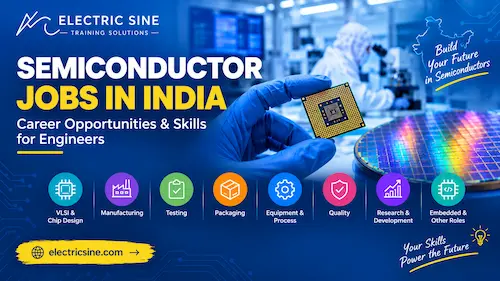
Semiconductor Jobs in India: Career Opportunities, Skills, Salary & How to Start


The semiconductor industry is becoming an important career area for engineering students, fresh graduates and experienced professionals in India. With the growth of semiconductor design, electronics manufacturing, chip fabrication, testing and packaging, the demand for specialized technical skills is expected to remain an important part of India's electronics ecosystem.

For students from Electrical Engineering, Electronics and Communication Engineering (ECE), Electronics Engineering, Instrumentation, Computer Science and related disciplines, semiconductor technology can offer multiple career paths.

India Semiconductor Mission (ISM) is working toward building a semiconductor and display ecosystem and positioning India as a global hub for electronics manufacturing and design.

What Is the Semiconductor Industry?

Semiconductors are materials and technologies used to manufacture electronic components such as integrated circuits (ICs), microprocessors, memory devices, sensors and other electronic chips.

These technologies are essential for smartphones, computers, automobiles, communication systems, artificial intelligence, healthcare equipment, defence systems and industrial electronics.

The semiconductor industry includes several stages, from chip design to manufacturing, testing and packaging.

Major areas include:

  • Semiconductor chip design
  • VLSI design
  • Analog and digital IC design
  • Verification and validation
  • Semiconductor fabrication
  • Wafer processing
  • Assembly, Testing, Marking and Packaging (ATMP)
  • Outsourced Semiconductor Assembly and Test (OSAT)
  • Semiconductor testing
  • Equipment maintenance
  • Process engineering
  • Quality control
  • Semiconductor research and development

Why Are Semiconductor Jobs Growing in India?

India is developing its semiconductor ecosystem through government initiatives, manufacturing projects, design support and talent-development programmes.

According to MeitY's February 2026 update, approvals included one semiconductor fab, eight ATMP/OSAT facilities, one compound semiconductor fab and 24 semiconductor design companies under the Design Linked Incentive scheme.

This development creates opportunities not only in chip design but also in:

Manufacturing → Testing → Packaging → Equipment → Quality → Research → Engineering Services

Therefore, semiconductor careers are not limited to VLSI designers.

Top Semiconductor Jobs in India

1. VLSI Design Engineer

VLSI engineers work on designing integrated circuits containing thousands or millions of electronic components.

Typical areas include:

  • Digital VLSI
  • Analog VLSI
  • RTL design
  • ASIC design
  • FPGA design
  • Physical design

Useful skills

  • Digital electronics
  • CMOS fundamentals
  • Verilog/SystemVerilog
  • Computer architecture
  • RTL design
  • Linux
  • Basic scripting

2. Verification Engineer

Verification engineers test whether a chip design behaves according to its specifications.

Important skills include:

  • SystemVerilog
  • UVM
  • Digital electronics
  • Verification methodologies
  • Simulation tools
  • Debugging

Verification is an important part of semiconductor product development because chip designs need extensive testing before manufacturing.

3. Physical Design Engineer

Physical design involves converting a logical chip design into a physical layout suitable for manufacturing.

Students interested in this area should learn:

  • CMOS basics
  • Digital electronics
  • VLSI concepts
  • Timing analysis
  • Physical design flow
  • Static Timing Analysis
  • EDA tools

4. Analog Design Engineer

Analog engineers work with circuits that process continuously varying electrical signals.

Important topics include:

  • Analog electronics
  • MOSFET
  • BJT
  • Operational amplifiers
  • Current mirrors
  • Differential amplifiers
  • ADC/DAC
  • Semiconductor device fundamentals

Students who enjoy Analog Electronics and Circuit Theory may explore this career path.

5. Semiconductor Process Engineer

Process engineers are involved in semiconductor manufacturing processes.

Their work can involve:

  • Wafer processing
  • Process control
  • Equipment monitoring
  • Yield improvement
  • Manufacturing processes
  • Cleanroom processes
  • Quality control

This area is particularly relevant as India develops semiconductor manufacturing and packaging capabilities.

6. Semiconductor Test Engineer

Testing is another important semiconductor career.

A test engineer may work on:

  • IC testing
  • Functional testing
  • Automated Test Equipment (ATE)
  • Failure analysis
  • Test development
  • Product validation

Knowledge of electronics, testing techniques and programming can be useful.

7. Semiconductor Equipment Engineer

Semiconductor manufacturing requires sophisticated equipment.

Equipment engineers may work on:

  • Equipment maintenance
  • Troubleshooting
  • Automation
  • Sensors
  • Control systems
  • Electrical systems
  • Preventive maintenance

This can be particularly relevant for Electrical and Electronics Engineers.

8. Packaging Engineer

After semiconductor fabrication, chips need to be packaged and tested.

Packaging engineers may work with:

  • Semiconductor packaging
  • Assembly
  • Testing
  • Thermal management
  • Packaging materials
  • Reliability testing

The growth of ATMP/OSAT facilities makes semiconductor packaging another area for engineering careers.

9. Semiconductor Quality Engineer

Quality engineers focus on maintaining product and manufacturing quality.

Typical areas include:

  • Quality control
  • Failure analysis
  • Process monitoring
  • Reliability
  • Root-cause analysis
  • Statistical process control

10. Embedded & Semiconductor Engineering

Semiconductor careers can also overlap with embedded systems.

Skills such as:

  • C/C++
  • Microcontrollers
  • Embedded systems
  • Digital electronics
  • ARM architecture
  • RTOS
  • Communication protocols

can be useful for roles connected with semiconductor products and embedded applications.

Which Engineering Branch Is Best for Semiconductor Jobs?

There is no single engineering branch that is limited to semiconductor careers.

Students from several disciplines can enter different parts of the semiconductor ecosystem.

Engineering BranchPossible Semiconductor Areas
ECEVLSI, IC Design, Verification, Embedded
Electrical EngineeringSemiconductor Equipment, Power Electronics, Testing, Manufacturing
Electronics EngineeringVLSI, Analog/Digital Design, Testing
InstrumentationProcess Control, Sensors, Manufacturing
Computer ScienceSemiconductor Software, Verification, Automation
Mechanical EngineeringManufacturing Equipment, Packaging
Chemical EngineeringSemiconductor Manufacturing Processes

The right career path depends on the student's technical interests and the skills they develop.

Skills Required for Semiconductor Jobs

A degree alone may not be sufficient for specialized semiconductor roles. Building practical technical skills can help students prepare for industry-oriented positions.

Core Electronics Skills

Start with:

  • Basic Electronics
  • Digital Electronics
  • Analog Electronics
  • Semiconductor Devices
  • Circuit Theory
  • Signals and Systems

VLSI Skills

For VLSI-oriented careers:

  • CMOS
  • Verilog
  • SystemVerilog
  • RTL Design
  • FPGA
  • ASIC
  • VLSI Design Flow
  • Verification

Programming Skills

Programming can also be valuable.

Consider learning:

  • C
  • C++
  • Python
  • Linux
  • Shell scripting

Additional Skills

Depending on the role:

  • MATLAB
  • EDA tools
  • Embedded systems
  • PCB design
  • Microcontrollers
  • Data analysis
  • Semiconductor testing

How Can Freshers Get a Semiconductor Job?

If you are an engineering student or fresher, follow a structured approach.

Step 1: Strengthen Electronics Fundamentals

Start with:

Semiconductor Devices → Analog Electronics → Digital Electronics → Microprocessors → VLSI

Step 2: Select a Career Track

Choose one primary area:

VLSI Design | Verification | Physical Design | Analog Design | Testing | Manufacturing | Packaging | Equipment

Step 3: Learn Industry-Relevant Tools

For example, VLSI aspirants can begin with Verilog/SystemVerilog and gradually learn relevant EDA workflows.

Step 4: Build Projects

Instead of only collecting certificates, create practical projects.

Examples:

  • Verilog-based digital circuits
  • FPGA projects
  • UART implementation
  • Digital clock
  • FIFO design
  • ALU design
  • ADC/DAC study projects
  • Embedded systems projects

Step 5: Build Your Resume

Highlight:

  • Technical projects
  • Internships
  • Relevant courses
  • Tools
  • Programming skills
  • Core electronics knowledge

Step 6: Apply for Internships and Entry-Level Roles

Look at semiconductor companies, electronics manufacturers, design firms, research organisations and relevant government/industry programmes.

Semiconductor Courses and Learning Opportunities

Students who are new to the semiconductor field can start with basic semiconductor concepts before moving into specialized subjects.

The India Semiconductor Mission and MeitY currently provide an Introduction to Semiconductors learning initiative covering semiconductor fundamentals, chip manufacturing and India's semiconductor ecosystem.

MeitY has also highlighted talent development through programmes such as B.Tech in Electronics Engineering (VLSI Design and Technology), Diploma in IC Manufacturing and Minor Degree in Electronics Engineering (VLSI Design and Technology).

This indicates that semiconductor education is increasingly being integrated into formal engineering and skill-development pathways.

Semiconductor Jobs for Electrical Engineering Students

Electrical Engineering students may initially think semiconductor careers are mainly for ECE students. However, semiconductor manufacturing and equipment involve several electrical engineering concepts.

Electrical engineers can explore areas such as:

  • Semiconductor equipment
  • Power systems for manufacturing facilities
  • Industrial automation
  • Control systems
  • Testing
  • Instrumentation
  • Power electronics
  • Manufacturing operations
  • Equipment maintenance

Therefore, Electrical Engineering students can also build semiconductor-related careers by adding electronics, semiconductor devices, automation and control skills.

Semiconductor Jobs for ECE Students

ECE students have a direct connection to several semiconductor domains.

Popular areas include:

  • VLSI
  • ASIC
  • FPGA
  • Verification
  • Physical Design
  • Analog IC Design
  • Digital IC Design
  • Embedded Systems
  • Semiconductor Testing

Students interested in chip design should pay particular attention to Digital Electronics, CMOS, Computer Architecture, Verilog/SystemVerilog and VLSI Design.

Is Semiconductor a Good Career for Freshers?

Semiconductor careers require specialized technical knowledge, so students should focus on building strong fundamentals and practical skills.

The industry includes many different job functions. Therefore, students should not search only for the title ā€œSemiconductor Engineer.ā€

Instead, search for roles such as:

  • VLSI Engineer
  • Design Engineer
  • Verification Engineer
  • Physical Design Engineer
  • Test Engineer
  • Process Engineer
  • Equipment Engineer
  • Packaging Engineer
  • Quality Engineer
  • Applications Engineer
  • Embedded Engineer

This broader approach can help job seekers identify more relevant opportunities.

Future of Semiconductor Careers in India

India's semiconductor ecosystem is being developed across design, manufacturing, packaging, testing, research and talent development.

The government's India Semiconductor Mission describes its objective as building a vibrant semiconductor and display ecosystem and supporting India's emergence as a global hub for electronics manufacturing and design.

At the same time, MeitY has identified talent development as an important component of India's semiconductor strategy.

For engineering students, this means semiconductor careers can extend beyond traditional VLSI design into manufacturing, testing, packaging, equipment, automation and research.

Conclusion

Semiconductor jobs in India cover much more than chip design. Opportunities can exist across VLSI, verification, physical design, semiconductor manufacturing, testing, packaging, equipment, quality and embedded technologies.

For students and job seekers, the most important step is to identify a specific semiconductor career path and build the required technical skills.

If you are an Electrical, Electronics or ECE student, start with strong fundamentals and gradually develop practical skills in areas such as VLSI, embedded systems, semiconductor devices, digital electronics, testing and automation.

Build your skills today to prepare for the semiconductor opportunities of tomorrow.

image

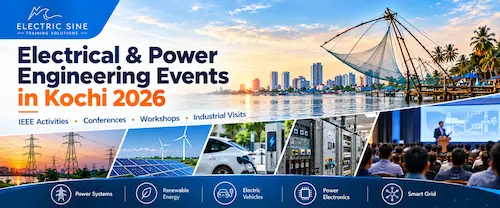
Electrical and Power Engineering Events in Kochi 2026: Conferences, IEEE Activities and Opportunities for Engineering Students

Electrical and Power Engineering events in Kochi are creating valuable opportunities for engineering students, researchers, professionals and technology enthusiasts to learn about the latest developments in the power and energy sector.

Kochi and the wider Kerala engineering community regularly host technical meetings, workshops, industrial visits, conferences and student activities related to electrical engineering, power systems, renewable energy, smart grids, electric vehicles, power electronics and energy management.

For students pursuing Electrical and Electronics Engineering (EEE), Electrical Engineering, Electronics Engineering and related disciplines, these events can provide exposure beyond classroom learning.

Why Electrical and Power Engineering Events Matter

Electrical engineering is rapidly changing with the development of renewable energy, smart grids, energy storage, electric vehicles, automation and digital power systems.

Traditional topics such as:

  • Power Generation
  • Power Transmission
  • Power Distribution
  • Electrical Machines
  • Power Systems
  • High Voltage Engineering
  • Electrical Measurements
  • Protection and Switchgear

are now increasingly connected with technologies such as:

  • Smart Grid
  • Renewable Energy
  • Battery Energy Storage
  • Electric Vehicles
  • Power Electronics
  • Artificial Intelligence
  • Industrial Automation
  • Energy Management
  • Digital Monitoring and Control

Technical conferences and engineering events provide students with an opportunity to understand how these subjects are applied in real-world engineering.

IEEE Power & Energy Society Activities in Kerala

The IEEE Power & Energy Society (IEEE PES) is one of the major professional communities focused on electric power and energy technologies.

In Kerala, the IEEE PES community conducts technical programmes, student activities, professional networking opportunities and educational initiatives.

The IEEE PES Kerala Chapter held its 2026 Annual General Meeting on February 1, 2026, at the IEEE Kerala Section Office in Kochi. According to the IEEE event report, the meeting brought together professional and student members to discuss the chapter's activities, technical engagement, collaboration and future plans.

The event demonstrates the role of Kochi as one of the locations where professionals and students connected with the power and energy engineering community can participate in technical activities.

Recent Electrical Engineering Activities in Kochi and Kerala

Electrical engineering events are not limited to conferences. Student chapters, engineering institutions and professional organisations also conduct workshops, technical talks, industrial visits and competitions.

For example, Rajagiri School of Engineering & Technology has conducted several EEE-related activities during 2026.

These include a hands-on workshop on Electric Drives and Industrial Automation, a rooftop solar power plant visit, an EV-focused guest lecture and other technical programmes.

Such activities are particularly useful for students because they connect theoretical subjects with practical engineering applications.

Electrical and Power Engineering Conference in Kochi: REPE 2026

One of the electrical and power engineering conferences listed for Kochi in September 2026 is the Hinweis Fifth International Conference on Recent Developments in Electrical and Power Engineering (REPE 2026).

According to the conference's official website, REPE 2026 was scheduled in hybrid mode on September 26–27, 2026, with the primary on-site programme in Kochi, India. The conference is intended to bring together academicians, researchers, engineers, industry professionals and students to share research and technical developments.

The conference covers areas connected with modern electrical and power engineering and provides a platform for technical presentations, research discussions and professional interaction.

Key Areas Covered

Electrical and power engineering conferences commonly cover subjects such as:

  • Power Systems
  • Renewable Energy
  • Solar Energy
  • Energy Storage
  • Power Electronics
  • Electrical Machines
  • Electrical Drives
  • Smart Grids
  • Power System Automation
  • High Voltage Engineering
  • Electrical Measurement and Instrumentation
  • Energy Efficiency
  • Fault Monitoring and Diagnostics

These areas are highly relevant to the changing requirements of the electrical power sector.

Research Opportunities for Electrical Engineering Students

Technical conferences can be particularly useful for students who are interested in research and higher education.

Students working on final-year projects or postgraduate research can use conferences to:

  1. Understand current research areas.
  2. Learn about emerging technologies.
  3. Present technical work.
  4. Receive feedback from researchers and professionals.
  5. Explore possible research topics.
  6. Build professional connections.
  7. Understand industry challenges.

For B.Tech students, attending technical events can also help in selecting meaningful final-year project topics.

For example, instead of developing a project around only a conventional electrical circuit, students can explore topics involving solar power, EV charging, battery management, smart grids, IoT-based energy monitoring, power quality or industrial automation.

Electrical Engineering Topics Students Should Follow in 2026

The power sector is moving toward more connected, efficient and sustainable systems.

1. Renewable Energy

Solar and wind power are becoming important parts of modern electricity systems.

Students can explore:

  • Solar PV systems
  • Grid-connected solar systems
  • Solar power forecasting
  • Wind energy
  • Hybrid renewable systems
  • Renewable energy integration

2. Smart Grid Technology

Smart grids combine electrical infrastructure with communication, monitoring and digital control.

Important areas include:

  • Smart meters
  • Demand response
  • Distribution automation
  • Grid monitoring
  • Microgrids
  • Grid stability
  • Digital substations

3. Electric Vehicles

EV technology has created new opportunities for electrical engineers.

Important topics include:

  • EV motors
  • Battery systems
  • Battery Management Systems
  • EV charging stations
  • Fast charging
  • Power converters
  • Vehicle-to-Grid technology

4. Power Electronics

Power electronics plays an important role in renewable energy, EVs, industrial drives and modern power systems.

Students can explore:

  • DC-DC converters
  • Inverters
  • Rectifiers
  • Multilevel converters
  • Motor drives
  • Wide-bandgap semiconductor devices

5. Energy Storage

Energy storage is becoming increasingly important as renewable energy penetration increases.

Major areas include:

  • Lithium-ion batteries
  • Battery management
  • Grid-scale storage
  • Hybrid energy storage
  • Energy storage systems
  • Battery safety and monitoring

6. AI in Power Systems

Artificial Intelligence and Machine Learning are increasingly being explored for electrical power applications.

Potential applications include:

  • Load forecasting
  • Fault detection
  • Predictive maintenance
  • Renewable energy forecasting
  • Power quality analysis
  • Grid optimisation

IEEE PES itself continues to feature technical discussions around digitalisation, AI, grid resilience and modern power systems.

Benefits for B.Tech Electrical and Electronics Engineering Students

Students do not need to wait until graduation to participate in technical activities.

Attending workshops, conferences, seminars and industrial visits can help students develop:

Technical Knowledge

Students can learn how concepts studied in subjects such as Power Systems, Electrical Machines, Control Systems and Power Electronics are used in practical applications.

Industry Awareness

Technical programmes can introduce students to industrial equipment, engineering workflows and current technology trends.

Project Ideas

Conferences and workshops can expose students to real engineering problems that can be converted into academic projects.

Networking

Students can interact with faculty members, researchers, engineers and other students interested in similar technical areas.

Career Awareness

Understanding industry trends can help students identify areas they may want to develop skills in, such as power systems, renewable energy, EV technology, automation or power electronics.

Industrial Exposure for Electrical Engineering Students

Industrial visits are another important part of electrical engineering education.

For example, an IEEE-listed industrial visit to Kerala Electrical & Allied Engineering Co. (KEL), Mamala, Kochi provided participants exposure to electrical machine manufacturing, transformer assembly and testing, industrial safety, automation and power distribution systems. The event report states that more than 47 participants attended.

Experiences like these help students understand the difference between textbook concepts and industrial implementation.

How Students Can Find Electrical Engineering Events in Kerala

Students looking for electrical engineering events in Kerala should regularly monitor:

  • IEEE Kerala Section activities
  • IEEE PES Kerala Chapter
  • IEEE Student Branches
  • Engineering college websites
  • EEE department announcements
  • Technical conference websites
  • Industry workshops
  • Research conferences
  • Professional engineering communities

IEEE PES maintains an official calendar of upcoming conferences and technical events worldwide, while local IEEE chapters and student branches publish their own programmes.

Upcoming Power and Energy Opportunities Beyond Kochi

Students interested in power engineering can also look beyond Kochi.

For example, the 2026 IEEE Sustainable Power and Energy Conference (iSPEC 2026) is scheduled for December 4–6, 2026, at Mar Baselios College of Engineering and Technology, Thiruvananthapuram. The event is organised by the IEEE Power & Energy Society Kerala Chapter in association with the IEEE Kerala Section and focuses on sustainable power and energy technologies.

This gives Kerala-based students another opportunity to explore developments in sustainable power systems and energy technologies.

How Electric Sine Can Help Engineering Students

For students preparing for engineering examinations and careers, following technical developments can be as important as studying the syllabus.

Electric Sine provides electrical and electronics engineering learning resources covering technical concepts, exam preparation, objective questions, career information and engineering-related updates.

Students can use technical event information to discover new areas of engineering and then use structured learning resources to build their fundamentals.

Whether you are preparing for GATE, ESE/IES, SSC JE, KSEB-related examinations, technical interviews or engineering careers, understanding current developments in electrical engineering can help you connect academic concepts with industry applications.

Final Thoughts

Kochi and the wider Kerala engineering community continue to provide opportunities for students and professionals interested in electrical engineering, power systems, renewable energy, EVs, power electronics and smart-grid technologies.

From IEEE PES activities and student programmes to technical conferences, workshops and industrial visits, these events can provide valuable exposure to the changing power and energy sector.

For Electrical and Electronics Engineering students, participating in such activities can complement classroom learning and provide a better understanding of how electrical engineering technologies are being developed and applied in the real world.

Keep learning. Keep exploring. Keep building your engineering skills with Electric Sine.

? Visit electricsine.com for electrical and electronics engineering learning resources, exam preparation, career updates and technical content.

image

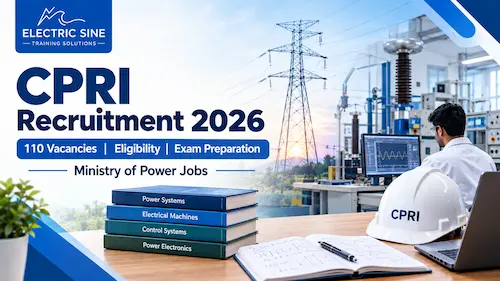
CPRI Recruitment 2026: Ministry of Power Jobs, Vacancies, Eligibility and Exam Preparation

CPRI Recruitment 2026 is an important opportunity for candidates looking for technical, engineering, scientific and other government-sector career opportunities under the Ministry of Power, Government of India.

The Central Power Research Institute (CPRI) has announced recruitment for multiple posts, including Engineering Officer Grade I, Engineering Assistant, Scientific Assistant, Technician Grade I, Technical Attendant Grade I, Assistant Grade II and MTS. The recruitment notification covers 110 vacancies.

For candidates from Electrical and Electronics Engineering (EEE) and related technical backgrounds, CPRI recruitment can be an opportunity to apply engineering knowledge in areas connected with power systems, electrical equipment, testing, measurements and power-sector technology.

Important: Candidates should always refer to the latest official CPRI recruitment notification for post-wise eligibility, age limits, educational qualifications, vacancies, selection process and examination details before applying.
CPRI Recruitment 2026 – Important Details

ParticularDetails
OrganizationCentral Power Research Institute (CPRI)
MinistryMinistry of Power, Government of India
Recruitment Year2026
Advertisement No.CPRI/06/2026
Total Vacancies110
Application Start Date19 September 2026
Last Date to Apply12 October 2026
Official WebsiteCPRI

The recruitment includes opportunities across different technical and non-technical categories. Since eligibility differs from one post to another, applicants should carefully check the official notification before submitting an application.

Posts Available in CPRI Recruitment 2026

CPRI Recruitment 2026 includes several posts for candidates with different educational and technical backgrounds.

1. Engineering Officer Grade I

Engineering Officer Grade I is an important technical position for eligible engineering graduates.

Candidates with engineering qualifications should check the discipline-specific requirements mentioned in the official notification. Electrical and related engineering graduates should pay particular attention to the prescribed branch and qualification requirements.

2. Engineering Assistant

Engineering Assistant is another technical position included in the recruitment.

Candidates with the required diploma or other prescribed technical qualifications can check whether they meet the eligibility conditions for the relevant discipline.

3. Scientific Assistant

Scientific Assistant positions are intended for candidates who possess the required science or technical qualifications specified by CPRI.

The exact educational requirements may differ depending on the post.

4. Technician Grade I

Technician Grade I is a technical position suitable for candidates who meet the prescribed technical qualification and other eligibility conditions.

Candidates should check the official notification for the required trade, qualification and experience, wherever applicable.

5. Technical Attendant Grade I

Technical Attendant Grade I is another opportunity included in the CPRI recruitment.

The eligibility requirements should be checked carefully because technical-attendant posts can have specific educational or trade-related conditions.

6. Assistant Grade II and MTS

The recruitment also includes Assistant Grade II and MTS positions, providing opportunities for candidates from different educational backgrounds.

The selection procedure and eligibility requirements can vary according to the post.

Why CPRI Recruitment Is Relevant for Electrical Engineering Candidates

The Central Power Research Institute works in areas associated with electrical power, power equipment, testing, research, standards and technology.

Because of this, Electrical Engineering candidates preparing for technical competitive examinations can benefit from strengthening their core engineering subjects.

Important areas to revise include:

  • Electrical Machines
  • Power Systems
  • Electrical Measurements
  • Power Electronics
  • Control Systems
  • Network Theory
  • Engineering Mathematics
  • Basic Electronics
  • Digital Electronics
  • Electrical Materials
  • Generation, Transmission and Distribution
  • Switchgear and Protection
  • High Voltage Engineering

However, candidates should not assume that every listed subject will have the same importance in the CPRI examination. The official syllabus and examination pattern applicable to the particular post should be treated as the primary reference.

CPRI Recruitment 2026 Eligibility

Eligibility depends on the post applied for.

Candidates should verify the following before applying:

Educational Qualification

The required qualification may include an engineering degree, diploma, science qualification, technical qualification or other prescribed qualification depending on the position.

Electrical and Electronics Engineering candidates should carefully check whether their specific engineering branch is accepted for the post they are interested in.

Age Limit

The applicable age limit can vary according to the post and category.

Candidates should check the official notification for:

  • Maximum age limit
  • Age relaxation
  • Category-wise relaxation
  • Cut-off date for calculating age

Other Requirements

Depending on the post, candidates may also need to satisfy specific conditions related to experience, technical qualifications, trade requirements or other criteria.

Therefore, checking the post-wise eligibility section of the official notification is essential.

CPRI Recruitment 2026 Selection Process

The selection process can differ depending on the position.

Candidates should carefully read the official recruitment notification to understand the applicable stages, which may include written examinations, skill-related assessments, document verification or other selection stages depending on the post.

Understanding the selection pattern before starting preparation can help candidates plan their study time more effectively.

How to Prepare for CPRI Recruitment 2026

A structured preparation strategy can help candidates improve their conceptual understanding, speed and accuracy.

1. Understand the Syllabus

Start by identifying the subjects and topics applicable to the post you are targeting.

Divide the syllabus into three categories:

  • Strong topics
  • Average topics
  • Weak topics

This makes it easier to create a realistic study schedule.

2. Revise Engineering Fundamentals

For Electrical Engineering candidates, strong fundamentals are important.

Revise important concepts, formulas and standard problem-solving methods from subjects such as Electrical Machines, Power Systems, Network Theory, Measurements and Control Systems.

Do not focus only on memorising formulas. Try to understand where and how each formula is applied.

3. Practice Objective Questions

Regular MCQ practice is essential for competitive examinations.

While practising questions:

  • Set a time limit
  • Avoid spending too long on one question
  • Mark questions that require further revision
  • Analyse every incorrect answer
  • Maintain a record of frequently repeated mistakes

Consistent MCQ practice can help improve both speed and accuracy.

4. Take Mock Tests

Mock tests can help candidates understand their current preparation level.

A good mock-test routine can help evaluate:

  • Speed
  • Accuracy
  • Time management
  • Subject-wise performance
  • Weak areas
  • Question-attempt strategy

After completing a mock test, spend time analysing the answers instead of looking only at the final score.

5. Revise Frequently

Revision should be a regular part of preparation.

Create short revision notes for:

  • Important formulas
  • Key concepts
  • Frequently repeated questions
  • Common mistakes
  • Important definitions

Short and regular revision can be more effective than trying to revise the entire syllabus immediately before the examination.

CPRI Preparation Strategy for Electrical & Electronics Engineers

Candidates from Electrical and Electronics Engineering can combine concept revision + MCQ practice + mock tests for their preparation.

A simple study cycle can be:

Learn → Revise → Practice MCQs → Analyse Mistakes → Revise Again

For example, after completing a topic such as Power Systems, solve objective questions based on that topic and identify the concepts where mistakes occur.

The same approach can be applied to Electrical Machines, Network Theory, Measurements, Control Systems and other technical subjects.

Common Mistakes to Avoid

Candidates preparing for CPRI recruitment should avoid some common preparation mistakes.

Studying Without Checking the Official Syllabus

Do not prepare randomly. First identify the subjects applicable to your post.

Focusing Only on Theory

Reading textbooks alone is not enough for an objective examination. Include regular question practice.

Ignoring Previous Questions

Previous-year and similar competitive-exam questions can help candidates understand the style and difficulty of objective questions.

Not Analysing Mock Tests

Taking many mock tests without analysing mistakes may not provide the expected improvement.

Leaving Revision Until the End

Regular revision helps candidates retain important formulas and concepts.

CPRI Recruitment 2026 for Students and Job Seekers

Government technical recruitment can be relevant to both engineering students preparing for competitive examinations and job seekers looking for technical career opportunities.

For Electrical and Electronics candidates, preparing for CPRI can also strengthen the technical foundation required for other engineering recruitment examinations.

Candidates can use their preparation to improve their understanding of core subjects while simultaneously developing speed and accuracy through objective-question practice.

Final Preparation Tips

If you are preparing for CPRI Recruitment 2026, focus on the following:

  1. Check the official notification carefully.
  2. Confirm your post-wise eligibility.
  3. Understand the applicable syllabus and examination pattern.
  4. Strengthen your engineering fundamentals.
  5. Practise objective questions regularly.
  6. Take mock tests under time constraints.
  7. Analyse mistakes after every test.
  8. Revise formulas and important concepts frequently.
  9. Track your preparation progress.
  10. Keep checking the official CPRI website for recruitment updates.

Prepare Smarter with Electric Sine

For Electrical and Electronics Engineering students and job seekers, Electric Sine provides learning resources designed to connect engineering concepts with competitive-examination preparation.

From technical concepts and objective questions to mock-test practice, consistent preparation can help candidates build stronger fundamentals and improve their examination readiness.

Whether you are preparing for CPRI recruitment or other technical government examinations, focus on understanding concepts, practising questions and improving accuracy step by step.

Keep learning. Keep practising. Keep improving.

Visit: electricsine.com

image

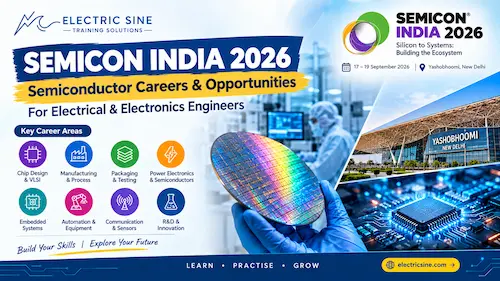
SEMICON India 2026: Semiconductor Careers, Opportunities and Skills for Engineering Students

The semiconductor industry has become an increasingly important part of India's electronics and technology ecosystem. From smartphones and electric vehicles to renewable energy systems, artificial intelligence, communication networks and data centres, semiconductor devices are fundamental to modern technology.

SEMICON India 2026, held from 17–19 September 2026 at Yashobhoomi, New Delhi, brought together stakeholders from across the semiconductor ecosystem under the theme ā€œSilicon to Systems: Building the Ecosystem.ā€ The event was jointly organised under the aegis of the India Semiconductor Mission (ISM), MeitY and SEMI.

For engineering students, the development of India's semiconductor ecosystem is particularly relevant because it creates demand for skills spanning chip design, electronics, semiconductor manufacturing, packaging, testing, power electronics, embedded systems, automation and advanced manufacturing.

What Is SEMICON India?

SEMICON India is a major semiconductor and electronics industry event that brings together companies, government organisations, researchers, academia, startups and professionals involved in the semiconductor ecosystem.

The 2026 edition focused on building a broader ecosystem extending from silicon and semiconductor manufacturing to systems and applications. The event featured industry discussions, technical sessions, exhibitions, startup activities and initiatives focused on talent development.

The 2026 event also highlighted areas including:

  • Semiconductor design
  • Manufacturing
  • Packaging
  • Electronics systems
  • Components
  • Materials
  • Equipment
  • Research and innovation
  • Talent development
  • Artificial intelligence
  • Supply chains
  • Sustainability
  • Startups

This wider ecosystem means semiconductor careers are not limited to chip designers alone.

Why Is the Semiconductor Industry Important?

A semiconductor chip can contain millions or even billions of electronic components and can perform complex computational, control or communication functions.

Semiconductors are used in:

  • Smartphones
  • Computers
  • Electric vehicles
  • Industrial automation
  • Consumer electronics
  • Renewable energy systems
  • Communication equipment
  • Satellites
  • Medical electronics
  • Defence electronics
  • Artificial intelligence systems
  • Data centres
  • Automotive electronics

As electronics become more integrated into everyday products, semiconductor technology becomes increasingly important across multiple engineering sectors.

India's Growing Semiconductor Ecosystem

India has been working to strengthen its semiconductor ecosystem through government programmes, industrial investments, technology development and talent initiatives.

The official SEMICON India 2026 information highlighted the development of an ecosystem covering design, manufacturing, packaging, materials, equipment, electronics systems, research, innovation and talent development.

The Government of India also reported that 12 projects had been approved under Semicon India 1.0, with three of those projects having commenced commercial production as of August 2026.

This broader ecosystem can create opportunities at different stages of the semiconductor value chain.

Semiconductor Career Opportunities for Engineering Students

Students sometimes associate semiconductor careers only with VLSI or chip design.

In reality, the semiconductor ecosystem requires professionals from multiple engineering backgrounds.

1. Semiconductor Chip Design

Chip design is one of the most technically specialised areas of the semiconductor industry.

Students interested in chip design can explore:

  • Digital electronics
  • Analog electronics
  • VLSI
  • CMOS circuits
  • Digital design
  • Verilog
  • SystemVerilog
  • RTL design
  • Verification
  • FPGA technology
  • Electronic Design Automation (EDA)

A strong understanding of digital electronics and circuit theory can provide a foundation for learning advanced chip-design concepts.

2. VLSI and Verification

Very Large Scale Integration (VLSI) involves designing integrated circuits containing large numbers of electronic components.

Career areas can include:

  • RTL design
  • Functional verification
  • Physical design
  • Static timing analysis
  • FPGA development
  • ASIC design
  • Design verification

Students from Electronics, ECE, Electrical and related disciplines can explore VLSI depending on their academic background and the requirements of individual employers.

3. Semiconductor Manufacturing

Manufacturing is another major part of the semiconductor ecosystem.

Semiconductor manufacturing involves highly controlled processes used to produce integrated circuits and other semiconductor devices.

Important areas include:

  • Semiconductor fabrication
  • Process engineering
  • Wafer processing
  • Cleanroom operations
  • Equipment engineering
  • Process control
  • Yield improvement
  • Quality control
  • Manufacturing automation

This area can be particularly relevant to students interested in combining electronics with manufacturing and industrial technology.

4. Semiconductor Packaging and Testing

A semiconductor device needs to be packaged and tested before it can be integrated into an electronic product.

Career areas include:

  • Semiconductor packaging
  • Assembly
  • Testing
  • Failure analysis
  • Quality assurance
  • Reliability testing
  • Test engineering
  • Automated test equipment

SEMICON India 2026 specifically highlighted India's OSAT landscape and the development of the semiconductor packaging ecosystem.

OSAT stands for Outsourced Semiconductor Assembly and Test.

5. Power Electronics and Semiconductors

Power electronics is another important connection between Electrical Engineering and the semiconductor industry.

Power semiconductor devices are used in applications such as:

  • Electric vehicles
  • Solar power systems
  • Battery systems
  • Industrial drives
  • Power supplies
  • Data centres
  • Renewable energy
  • Electrical grids

Technologies such as SiC (Silicon Carbide) and GaN (Gallium Nitride) are increasingly important in advanced power electronics.

SEMICON India's 2026 advanced-electronics discussions included the development of the power-electronics value chain and the roadmap for SiC and GaN technologies.

This creates an interesting intersection between Electrical Engineering, Power Electronics and Semiconductor Technology.

6. Embedded Systems

Semiconductors are the foundation of embedded electronic systems.

Students interested in embedded systems can learn:

  • Microcontrollers
  • Microprocessors
  • Embedded C
  • C/C++
  • Digital electronics
  • Sensors
  • Communication protocols
  • Real-time systems
  • PCB design
  • Firmware development

Embedded engineers can work on products ranging from industrial equipment to automotive and consumer electronics.

7. Semiconductor Equipment and Automation

Semiconductor manufacturing requires specialised equipment and highly controlled processes.

Electrical and Electronics Engineers can develop skills related to:

  • Industrial automation
  • PLC
  • Control systems
  • Sensors
  • Instrumentation
  • Motors and drives
  • Robotics
  • Process monitoring
  • Equipment maintenance
  • Automated manufacturing

This is one area where EEE students can connect their existing electrical engineering knowledge with semiconductor manufacturing.

8. Instrumentation and Testing

Testing is critical throughout semiconductor manufacturing and electronics production.

Instrumentation engineers may work with:

  • Sensors
  • Measurement systems
  • Data acquisition
  • Automated testing
  • Calibration
  • Process monitoring
  • Electronic test equipment
  • Quality systems

Students with a background in Electrical Engineering, Electronics or Instrumentation can therefore explore semiconductor-related testing and measurement roles.

Skills Engineering Students Should Develop

The semiconductor industry is multidisciplinary, so students should focus on building both fundamental and specialised skills.

Core Electronics

  • Analog Electronics
  • Digital Electronics
  • Electronic Devices
  • Circuit Theory
  • Signals and Systems
  • Communication Systems

Semiconductor-Specific Skills

  • VLSI
  • CMOS
  • Semiconductor devices
  • Verilog
  • SystemVerilog
  • FPGA
  • ASIC concepts
  • EDA tools
  • Semiconductor manufacturing
  • Semiconductor testing

Electrical Engineering Skills

EEE students can additionally focus on:

  • Power Electronics
  • Control Systems
  • Electrical Measurements
  • Power Systems
  • Industrial Automation
  • Instrumentation

Programming Skills

Programming is becoming increasingly useful across engineering domains.

Students can learn:

  • C
  • C++
  • Python
  • Embedded C
  • Basic scripting

The required programming skills vary according to the specific semiconductor career path.

SEMICON India 2026 and Student Opportunities

One of the notable student-focused initiatives associated with SEMICON India 2026 was its Semiconductor Hackathon.

The hackathon was open to undergraduate, postgraduate and PhD students from engineering, science and technology disciplines. Challenge areas included:

  • Chip Design
  • AI-enabled Semiconductor Manufacturing
  • Yield Optimisation
  • AI in EDA
  • Advanced Verification

The initiative was designed to connect academic learning with industry-defined semiconductor problems and provide exposure to industry experts and emerging technologies.

This highlights an important trend for students: semiconductor careers increasingly require not only theoretical knowledge but also problem-solving, project experience and practical technical skills.

Career Paths in the Semiconductor Industry

Engineering students can explore different pathways depending on their interests.

Career AreaUseful Skills
Chip DesignDigital Electronics, VLSI, Verilog
VLSI VerificationSystemVerilog, Verification, Digital Design
Semiconductor ManufacturingElectronics, Process Engineering, Manufacturing
Semiconductor TestingElectronics, Instrumentation, Testing
PackagingElectronics, Materials, Manufacturing
Power SemiconductorPower Electronics, Semiconductor Devices
Embedded SystemsC/C++, Microcontrollers, Electronics
AutomationPLC, Control Systems, Instrumentation
Equipment EngineeringElectrical, Electronics, Automation
EDAVLSI, Programming, Design Tools
Quality & ReliabilityTesting, Electronics, Data Analysis

The exact qualifications required depend on the employer and position.

What Can EEE Students Learn From the Semiconductor Industry?

For Electrical and Electronics Engineering students, semiconductor technology provides opportunities to expand beyond traditional electrical subjects.

A student with knowledge of:

Electrical Circuits
↓
Electronics
↓
Power Electronics
↓
Control Systems
↓
Instrumentation
↓
Embedded Systems
↓
Semiconductor Technology

can develop a broader understanding of modern electronic systems.

This is especially useful because semiconductor devices are increasingly integrated into electrical systems, vehicles, renewable-energy technologies and industrial automation.

How Students Can Prepare for Semiconductor Careers

Step 1: Strengthen Fundamentals

Start with:

  • Circuit Theory
  • Analog Electronics
  • Digital Electronics
  • Semiconductor Devices
  • Signals and Systems

Step 2: Choose a Specialisation

Depending on your interest, explore:

VLSI → Chip Design → Verification

or

Power Electronics → Power Semiconductors → EV/Renewable Energy

or

Instrumentation → Automation → Semiconductor Manufacturing

or

Embedded Systems → Microcontrollers → Electronics Products

Step 3: Learn Industry Tools

Students can gradually learn relevant simulation, design, programming and development tools.

Step 4: Build Projects

Practical projects can demonstrate your ability to apply engineering concepts.

Examples include:

  • FPGA projects
  • Microcontroller projects
  • PCB design
  • Power converter projects
  • Sensor systems
  • Digital logic projects
  • Embedded systems
  • Automation projects

Step 5: Practise Technical Questions

Regular practice of engineering MCQs and technical problems can help students strengthen their fundamentals.

This is also a natural place to internally link your Electrical Engineering MCQs and Mock Tests on Electric Sine.

Semiconductor Careers Are Not Only for ECE Students

The semiconductor ecosystem requires multiple engineering disciplines.

ECE / Electronics

Can explore:

  • VLSI
  • Chip design
  • Verification
  • Embedded systems
  • Semiconductor testing

Electrical Engineering

Can explore:

  • Power electronics
  • Equipment engineering
  • Automation
  • Control systems
  • Power semiconductor applications

Instrumentation

Can explore:

  • Process control
  • Sensors
  • Testing
  • Measurement
  • Manufacturing automation

Computer Science

Can explore:

  • EDA software
  • Semiconductor automation
  • AI applications
  • Software and systems
  • Data analysis

Therefore, students from different engineering backgrounds can explore semiconductor-related career paths by developing the appropriate technical skills.

Future of Semiconductor Careers in India

India's semiconductor ecosystem is developing across multiple stages, from design and manufacturing to packaging, testing, components and electronics systems.

SEMICON India 2026 brought together stakeholders across this broader ecosystem, with the event highlighting areas such as advanced electronics manufacturing, semiconductor packaging, power electronics, PCBs, talent development and startup activity.

For engineering students, this means semiconductor technology can be considered not just as a specialised electronics field, but as a broader career ecosystem involving electrical engineering, electronics, manufacturing, automation, testing, software and research.

Frequently Asked Questions

What is SEMICON India 2026?

SEMICON India 2026 was a major semiconductor and electronics industry event held from 17–19 September 2026 at Yashobhoomi, New Delhi, under the theme ā€œSilicon to Systems: Building the Ecosystem.ā€

Is semiconductor engineering a good career option for EEE students?

EEE students can explore semiconductor-related areas such as power electronics, equipment engineering, automation, control, testing and manufacturing, depending on their skills and qualifications.

Can ECE students work in semiconductor companies?

Yes. ECE graduates can develop skills in areas such as VLSI, chip design, verification, embedded systems, semiconductor testing and electronics manufacturing.

What should I study to enter the semiconductor industry?

Important foundations include Digital Electronics, Analog Electronics, Electronic Devices, Circuit Theory, VLSI and semiconductor fundamentals. Depending on the career path, students can also learn programming, embedded systems, power electronics or automation.

Is VLSI the only semiconductor career?

No. Semiconductor careers can span chip design, verification, manufacturing, packaging, testing, equipment engineering, automation, power electronics, embedded systems and other areas.

Conclusion

SEMICON India 2026 highlights the expanding scope of India's semiconductor and electronics ecosystem. The industry extends far beyond chip design, covering semiconductor manufacturing, packaging, testing, power electronics, embedded systems, automation, instrumentation, equipment and electronics systems.

For Electrical and Electronics Engineering students, this creates multiple areas to explore.

The best starting point is to build strong fundamentals and then develop specialised skills according to your career interest.

Learn the fundamentals. Build practical skills. Explore semiconductor technology. Prepare for the future of electronics.

⚔ Electric Sine

Learn • Practise • Grow

Explore Electrical, Electronics and Engineering learning resources at electricsine.com.

image

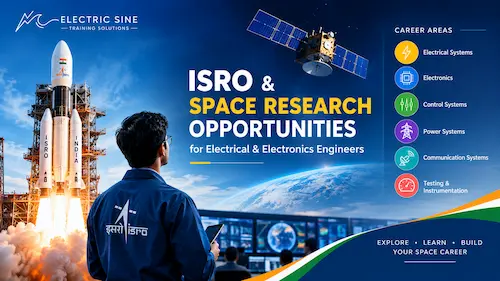
ISRO and Space Research Opportunities for Electrical & Electronics Engineers

A career in the space sector is an exciting option for engineering students who are interested in technology, research, innovation and complex engineering systems. In India, the Indian Space Research Organisation (ISRO) and the wider Department of Space provide career opportunities across several scientific and technical disciplines.

For Electrical and Electronics Engineering students, the space sector can connect engineering fundamentals with applications involving electrical systems, electronics, power systems, control systems, communication, testing and instrumentation.

ISRO's official career information lists opportunities in disciplines including Electrical, Electronics, Mechanical, Computer Science, Physics, Chemistry and Mathematics, depending on the recruitment and organisational requirements.

This makes space research and space technology an important career area for students who want to apply their engineering knowledge to challenging technical projects.

Why Consider a Career in Space Research?

Space missions require the integration of many engineering disciplines. A spacecraft, launch vehicle, satellite or ground-support system depends on numerous electrical and electronic subsystems working together.

Electrical and Electronics Engineers can develop knowledge that is relevant to areas such as:

  • Electrical systems
  • Power systems
  • Electronics
  • Control systems
  • Communication systems
  • Instrumentation
  • Testing and measurement
  • Signal processing
  • Embedded systems
  • Automation and monitoring

Working in such technology-driven environments can also expose engineers to areas where reliability, precision, testing and system-level engineering are extremely important.

1. Electrical Systems in Space Technology

Electrical engineering plays an important role in providing and managing electrical power for space-related systems.

Engineers need a strong understanding of concepts such as:

  • Electrical circuits
  • Electrical machines
  • Power electronics
  • Power distribution
  • DC and AC systems
  • Voltage regulation
  • Protection systems
  • Electrical measurements
  • Power conversion

For EEE students, a strong foundation in basic electrical engineering can therefore be useful when exploring space-sector engineering careers.

Important subjects to study

Students should pay attention to:

Electrical Circuits → Electrical Machines → Power Electronics → Power Systems → Control Systems → Measurements & Instrumentation

A strong understanding of these subjects can also help students prepare for technical recruitment examinations.

2. Power Systems and Power Electronics

Power is a critical part of any complex engineering system.

In space technology, engineers work with systems where electrical power needs to be generated, converted, controlled, distributed and monitored efficiently.

Students interested in this area can develop knowledge in:

  • Power electronics
  • Converters
  • Inverters
  • DC-DC converters
  • Voltage regulation
  • Battery systems
  • Electrical power management
  • Switching devices
  • Power semiconductor devices

Understanding power electronics can be particularly useful because modern engineering systems increasingly depend on efficient and reliable power conversion.

3. Electronics Engineering Opportunities

Electronics is another major engineering discipline associated with space technology.

Electronic systems can be involved in areas such as:

  • Signal processing
  • Data acquisition
  • Sensors
  • Embedded systems
  • Digital electronics
  • Analog electronics
  • Communication electronics
  • Control electronics
  • Instrumentation

Students from Electronics and Communication Engineering (ECE) and related disciplines can therefore explore space-sector opportunities in addition to traditional electronics industries.

ISRO's recruitment history includes Scientist/Engineer positions in Electronics, and its current recruitment information continues to show engineering recruitment based on specific disciplines and notifications.

4. Control Systems and Automation

Control engineering is an important area for students interested in aerospace and space technology.

Control systems are used to monitor and regulate engineering processes and help systems respond appropriately to changing conditions.

Students interested in this field should understand:

  • Transfer functions
  • Block diagrams
  • Feedback systems
  • Stability
  • Time response
  • Frequency response
  • Controllers
  • Sensors
  • Actuators
  • Digital control

A strong foundation in Control Systems can be valuable for engineers interested in automation, aerospace systems and other advanced engineering applications.

5. Communication Systems

Space missions depend heavily on communication and data transmission.

Communication-related engineering involves technologies that enable information to be transmitted between spacecraft, satellites, ground stations and other systems.

Students interested in this area can study:

  • Analog communication
  • Digital communication
  • Signals and systems
  • Antennas
  • Electromagnetic theory
  • Microwave engineering
  • Satellite communication
  • Signal processing
  • Communication networks

These subjects can provide a foundation for careers related to satellite and space communication technologies.

6. Testing and Instrumentation

Testing is an essential part of engineering development.

Space-related systems need extensive testing because the equipment must meet demanding performance and reliability requirements.

Instrumentation engineers can develop skills in:

  • Sensors
  • Transducers
  • Measurement systems
  • Data acquisition
  • Calibration
  • Instrumentation systems
  • Electronic testing
  • Signal conditioning
  • Industrial measurements

For Electrical and Electronics Engineering students, Measurements and Instrumentation can therefore be an important subject to master.

7. Electrical and Electronics Engineers Should Build Strong Fundamentals

Students often focus heavily on recruitment examinations while overlooking their engineering fundamentals.

For technical careers, it is important to build a strong understanding of core subjects.

Electrical Engineering students should focus on:

  1. Electrical Circuits
  2. Electrical Machines
  3. Power Systems
  4. Power Electronics
  5. Control Systems
  6. Electrical Measurements
  7. Signals and Systems
  8. Digital Electronics
  9. Analog Electronics
  10. Engineering Mathematics

Depending on the specific discipline and recruitment notification, the required subjects can vary.

8. ISRO Scientist/Engineer Career Opportunities

One of the important technical career routes within ISRO is the Scientist/Engineer category.

ISRO's official career information states that Scientist/Engineer opportunities are available for graduates, postgraduates and doctorates in various disciplines, including Electrical and Electronics, depending on the requirements of the organisation. Recruitment is conducted through the appropriate recruitment process, including the ISRO Centralised Recruitment Board (ICRB) for applicable posts.

Recruitment notifications specify important details such as:

  • Educational qualification
  • Required engineering discipline
  • Age requirements
  • Selection procedure
  • Examination details
  • Application dates
  • Number of vacancies
  • Other eligibility conditions

Therefore, students should always check the official ISRO recruitment notification before applying rather than relying only on information from third-party websites.

9. Other Technical Career Routes

Space-sector careers are not limited to one type of position.

ISRO's official career information also lists technical opportunities such as:

  • Scientist/Engineer
  • Technical Assistant
  • Scientific Assistant
  • Technician
  • Draughtsman
  • Research positions
  • Apprenticeship opportunities

Eligibility varies according to the position. For example, ISRO's career information describes Technical Assistant opportunities for candidates with relevant engineering diplomas, while Technician positions have different qualification requirements.

Research-oriented opportunities can also include positions such as Junior Research Fellow, Research Associate and Project Scientist, depending on current requirements.

10. What Should EEE Students Study for ISRO-Related Careers?

If you are an Electrical and Electronics Engineering student interested in space-sector opportunities, start with the fundamentals.

Core Electrical Subjects

  • Electrical Circuit Theory
  • Electrical Machines
  • Power Systems
  • Power Electronics
  • Control Systems
  • Electrical Measurements
  • Signals and Systems

Electronics and Technology Subjects

  • Analog Electronics
  • Digital Electronics
  • Communication Systems
  • Microprocessors and Microcontrollers
  • Embedded Systems
  • Instrumentation
  • Electromagnetic Theory

Supporting Skills

In addition to academic subjects, students can develop:

  • Problem-solving ability
  • Numerical aptitude
  • Technical analysis
  • Programming fundamentals
  • Simulation skills
  • Data interpretation
  • Technical communication

The exact preparation should always be aligned with the latest official recruitment notification and the candidate's discipline.

11. Practical Learning Can Make a Difference

Engineering students should not depend entirely on theoretical learning.

Practical projects can help students understand how engineering concepts work in real applications.

For example, an EEE student can work on projects involving:

  • Solar power systems
  • Battery management
  • DC-DC converters
  • Motor control
  • Sensor-based systems
  • Microcontroller projects
  • Power monitoring
  • Automatic control systems
  • Data acquisition
  • Embedded systems

These projects can help connect classroom concepts with practical engineering applications.

12. Prepare Through Previous Questions and Mock Tests

Technical recruitment preparation requires both conceptual understanding and problem-solving practice.

Students can improve their preparation by:

  1. Revising engineering fundamentals
  2. Creating subject-wise notes
  3. Solving previous questions
  4. Practising numerical problems
  5. Taking timed mock tests
  6. Identifying weak subjects
  7. Revising regularly
  8. Tracking preparation progress

For Electric Sine, this section can naturally link to your Electrical Engineering MCQs, mock tests and previous-year-question resources.

Example internal link placement

Students preparing for technical engineering examinations can strengthen their concepts by practising Electrical Engineering MCQs and Mock Tests regularly.

You can link Electrical Engineering MCQs, Mock Tests, and Previous Year Questions to the relevant pages on Electric Sine.

13. ISRO Careers Are Not Limited to One Engineering Branch

Space technology is multidisciplinary.

Different projects can require expertise from areas such as:

Engineering / Science AreaRelated Knowledge
Electrical EngineeringPower systems, electrical systems, machines
Electronics EngineeringDigital electronics, analog electronics, embedded systems
CommunicationSignals, antennas, communication systems
Control EngineeringFeedback, controllers, automation
InstrumentationSensors, measurements, data acquisition
Mechanical EngineeringMechanical systems and structures
Computer ScienceSoftware, computing and data systems
PhysicsSpace science and scientific research

The availability of specific posts and disciplines changes according to organisational requirements and individual recruitment notifications. ISRO explicitly notes that opportunities may open for other disciplines as required in the future.

14. How to Start Preparing for a Space Research Career

If you are currently pursuing B.Tech or another engineering qualification, you do not have to wait until graduation to begin preparing.

Step 1: Strengthen your fundamentals

Start with core subjects such as Electrical Circuits, Machines, Power Systems, Power Electronics and Control Systems.

Step 2: Practise numerical problems

Technical subjects require the ability to apply formulas and concepts to problems.

Step 3: Solve previous questions

Previous questions can help you understand the style and difficulty of technical examinations.

Step 4: Take mock tests

Timed practice helps improve speed, accuracy and exam management.

Step 5: Develop practical skills

Work on small electrical, electronics, control or instrumentation projects.

Step 6: Follow official notifications

Recruitment conditions, disciplines, dates and selection procedures can change. Always verify the latest information through the official ISRO careers portal.

15. Current ISRO Opportunities: Check Official Notifications

ISRO regularly publishes recruitment notifications through its official career portal.

As of September 2026, the official careers pages list multiple types of opportunities across ISRO centres and related organisations, including Scientist/Engineer recruitment, research positions, apprenticeships and technical posts.

For example, ISRO's current opportunities page lists recruitment under the Centralised Recruitment Board, while individual centres such as SAC, URSC, LPSC and HSFC publish their own opportunities when required.

Important: Current vacancies, eligibility, application deadlines and selection procedures can change. Candidates should use the official ISRO website as the final source of recruitment information.

16. Skills That Can Help Electrical Engineers

For students interested in space technology, developing a combination of theoretical knowledge, practical skills and problem-solving ability can be useful.

Technical Skills

  • Circuit analysis
  • Power systems
  • Power electronics
  • Control systems
  • Electronics
  • Instrumentation
  • Communication
  • Embedded systems
  • Electrical measurements
  • Programming fundamentals

Professional Skills

  • Problem solving
  • Analytical thinking
  • Technical documentation
  • Teamwork
  • Communication
  • Project management
  • Continuous learning

The goal should not simply be to memorize topics for an examination. Students should aim to understand how electrical and electronic systems work and how different engineering concepts interact in a complete system.

17. Why Electrical Engineering Fundamentals Matter

Space technology may involve highly advanced systems, but those systems are built on fundamental engineering principles.

For example:

Electrical Circuits → Power Electronics → Electrical Power Systems → Control → Instrumentation → Integrated Systems

Understanding basic concepts makes it easier to learn advanced technologies later.

This is why students should not ignore subjects such as circuit theory, network analysis, control systems and measurements.

For students preparing for technical careers, strong fundamentals can provide a foundation for both competitive examinations and future engineering work.

18. Build Your Career Step by Step

A possible preparation path for an engineering student can look like this:

B.Tech / Engineering Fundamentals
↓
Core Electrical & Electronics Subjects
↓
Problem-Solving Practice
↓
Previous Questions & Mock Tests
↓
Practical Projects
↓
Technical Skill Development
↓
Monitor Official Recruitment Notifications
↓
Apply When Eligible

This approach can also help students keep multiple career options open across electrical, electronics, automation, instrumentation, power and other engineering sectors.

Frequently Asked Questions

Is ISRO a career option for Electrical Engineers?

Yes. ISRO's official career information includes Electrical among the disciplines for which Scientist/Engineer opportunities have been offered, subject to the requirements of individual recruitment notifications.

Can EEE students apply for ISRO jobs?

Eligibility depends on the specific recruitment notification. Candidates should check the required discipline, qualification and other conditions in the official notification before applying.
What subjects should EEE students study for ISRO-related opportunities?

Important areas can include Electrical Circuits, Electrical Machines, Power Systems, Power Electronics, Control Systems, Measurements and other subjects specified by the relevant recruitment notification.

Are there opportunities other than Scientist/Engineer posts?

Yes. ISRO's career information lists technical and scientific categories including Technical Assistant, Scientific Assistant, Technician and research-related opportunities, depending on requirements.

Where can I find official ISRO recruitment notifications?

ISRO publishes recruitment information through its official Careers and Current Opportunities pages.

Conclusion

A career in space research can be an exciting pathway for Electrical and Electronics Engineering students who are interested in advanced technology, engineering systems and scientific applications.

Electrical systems, power electronics, control systems, electronics, communication, instrumentation and testing are all important areas of knowledge for engineers working with complex technological systems.

For students interested in ISRO-related careers, the best preparation begins with strong engineering fundamentals, regular problem-solving practice, practical projects and continuous awareness of official recruitment notifications.

Whether your goal is a career in ISRO, another government engineering organisation, the private aerospace industry or advanced technology sectors, building strong Electrical and Electronics Engineering skills can provide a valuable foundation.

Learn. Practise. Build your engineering skills. Prepare for your future.

image

Central Government Engineering Career Opportunities in India

Major Central Government Engineering Opportunities

1. UPSC Engineering Services Examination

The UPSC Engineering Services Examination, commonly known as ESE or IES, is one of the major examinations for engineering graduates.

It includes engineering disciplines such as:

  • Electrical Engineering
  • Electronics and Telecommunication Engineering
  • Mechanical Engineering
  • Civil Engineering

Selected candidates may be appointed to technical and engineering services under different Central Government departments.

The selection process generally includes:

  1. Preliminary examination
  2. Main examination
  3. Personality test

Candidates should prepare core engineering subjects along with general studies and engineering aptitude.

2. SSC Junior Engineer

The SSC Junior Engineer examination is an important opportunity for diploma holders and degree holders who meet the post-wise eligibility requirements.

SSC JE recruitment may include engineering disciplines such as:

  • Electrical Engineering
  • Civil Engineering
  • Mechanical Engineering

Junior Engineers may work in areas such as:

  • Electrical maintenance
  • Government building services
  • Project supervision
  • Construction and infrastructure
  • Inspection and technical support

The examination generally includes General Intelligence, General Awareness and technical engineering subjects.

3. Railway Engineering Jobs

Indian Railways offers different technical and engineering opportunities through recruitment examinations and notifications.

Electrical engineering candidates may find opportunities related to:

  • Railway electrical systems
  • Traction and power supply
  • Rolling stock maintenance
  • Railway infrastructure
  • Signalling and electrical installations

Depending on the recruitment, candidates may be appointed to technical, supervisory or engineering positions.

4. Central Government Public Sector Undertakings

Public Sector Undertakings, commonly called PSUs, operate in important sectors such as power, petroleum, energy, manufacturing and infrastructure.

Some well-known organisations include:

  • NTPC
  • BHEL
  • GAIL
  • ONGC
  • POWERGRID
  • Indian Oil
  • NHPC
  • NLC India
  • SAIL

Recruitment methods may include:

  • GATE-based recruitment
  • Company-specific examinations
  • Interviews
  • Direct recruitment
  • Apprenticeship-to-recruitment pathways, where applicable

Candidates should check the official recruitment notification of each organisation for eligibility and selection details.

5. ISRO and Space Research Opportunities

The Indian Space Research Organisation offers technical and engineering opportunities in areas such as:

  • Electrical systems
  • Electronics
  • Control systems
  • Power systems
  • Communication systems
  • Testing and instrumentation

Recruitment may be conducted through written examinations, interviews or organisation-specific selection procedures.

These roles can involve research, design, testing, production and maintenance of technical systems.

6. DRDO Engineering Careers

The Defence Research and Development Organisation provides opportunities for engineers and technical professionals in defence-related research and development.

Engineering roles may involve:

  • Electrical systems
  • Electronics and communication
  • Embedded systems
  • Control and instrumentation
  • Testing and development
  • Defence technology projects

The qualification and selection process depend on the specific post and recruitment notification.

7. BARC and Atomic Energy Sector

The Department of Atomic Energy and organisations such as BARC offer technical careers in engineering and scientific fields.

Electrical and Electronics Engineering candidates may find opportunities in:

  • Power systems
  • Instrumentation
  • Control systems
  • Electronics
  • Maintenance
  • Research and development

These positions usually require strong technical knowledge and may involve written tests, interviews or specialised selection procedures.

8. Central Government Ministries and Departments

Engineers may also find opportunities in different Central Government ministries and departments.

Possible work areas include:

  • Electrical design
  • Building services
  • Infrastructure projects
  • Public works
  • Transport systems
  • Energy management
  • Technical inspection
  • Project planning
  • Maintenance and supervision

Recruitment may be conducted through UPSC, SSC or department-specific notifications.

Engineering Disciplines with Government Career Opportunities

Central Government engineering opportunities are available across several disciplines.

Engineering DisciplineCommon Career Areas
Electrical EngineeringPower systems, maintenance, transmission, electrical installations
Electronics EngineeringCommunication, embedded systems, control, electronic systems
Mechanical EngineeringManufacturing, machines, thermal systems, maintenance
Civil EngineeringConstruction, roads, bridges, public infrastructure
Instrumentation EngineeringProcess control, automation, measurement systems
Computer Science EngineeringSoftware, cybersecurity, networks, digital services

The available posts depend on the recruitment notification and the qualification accepted for each position.

Eligibility for Central Government Engineering Jobs

Eligibility varies according to the organisation and post. Common requirements include:

  • Diploma in the relevant engineering discipline
  • Bachelor’s degree in Engineering or Technology
  • Relevant technical qualification
  • Age within the prescribed limit
  • Required nationality and other conditions
  • Medical or physical standards for specific posts, where applicable

Some recruitments accept diploma holders, while others require a degree. Candidates should always check the official notification before applying.
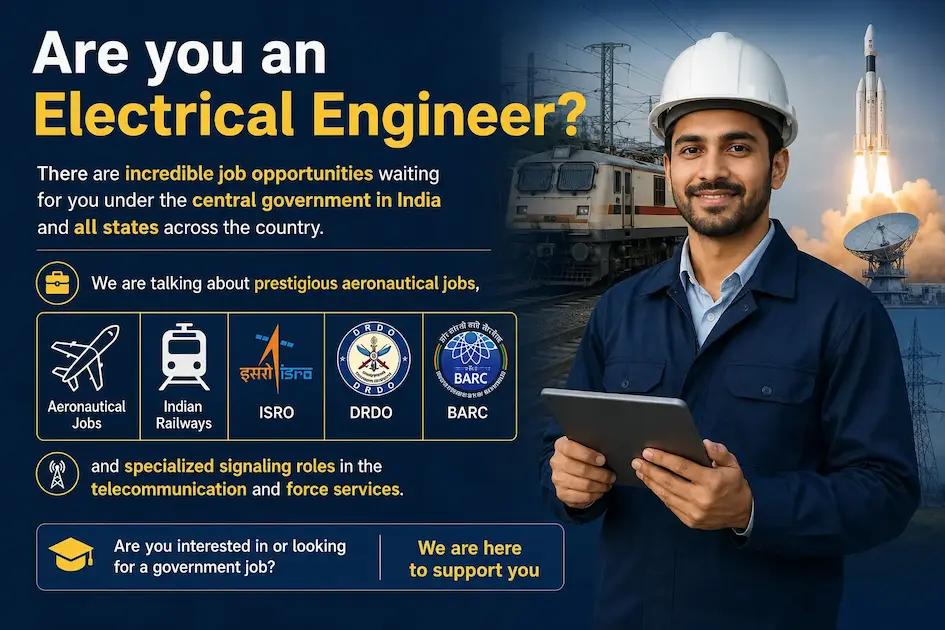
How to Prepare for Government Engineering Exams

1. Understand the Examination Syllabus

Start by reviewing the official syllabus and identifying the technical and non-technical sections.

2. Strengthen Core Subjects

Electrical Engineering candidates should focus on:

  • Electrical Circuits
  • Electrical Machines
  • Power Systems
  • Control Systems
  • Measurements
  • Power Electronics
  • Electrical Materials
  • Basic Electronics
  • Network Theory

3. Practise Previous-Year Questions

Previous-year questions help candidates understand the question pattern, difficulty level and frequently tested topics.

4. Take Regular Mock Tests

Mock tests can improve:

  • Time management
  • Accuracy
  • Speed
  • Question selection
  • Exam confidence

5. Revise Important Formulas

Maintain a separate notebook for important formulas, concepts and mistakes identified during practice.

6. Follow Official Notifications

Recruitment dates, vacancies, eligibility conditions and examination patterns may change. Candidates should regularly check official government recruitment websites.

Career Benefits of Government Engineering Jobs

Government engineering careers may provide opportunities such as:

  • Technical responsibilities
  • Structured career progression
  • Training and professional development
  • Work on public infrastructure
  • Opportunities in different engineering departments
  • Long-term employment benefits according to service rules
  • Experience in large-scale engineering projects

The actual salary, allowances, promotion structure and service benefits depend on the organisation, post and applicable government rules.

Government Engineering Exams for Electrical Engineers

Electrical Engineering candidates can explore the following examinations and recruitment options:

  • UPSC ESE/IES Electrical
  • SSC JE Electrical
  • GATE
  • Railway technical recruitment
  • PSU recruitment
  • ISRO recruitment
  • DRDO recruitment
  • BARC recruitment
  • Central Government department vacancies
  • Other technical recruitment examinations

A candidate may prepare for more than one examination because several exams share common Electrical Engineering subjects.

Conclusion

Central Government engineering career opportunities are available in public infrastructure, power, railways, defence, space research, energy, manufacturing and technical administration.

For better preparation, candidates should build strong engineering fundamentals, practise previous-year questions, revise regularly and follow official recruitment notifications.

Electrical Engineering students, graduates and job seekers can use Electric Sine to improve technical knowledge, practise questions and prepare for competitive engineering examinations.

Learn. Practice. Prepare. ? electricsine.com

image

SSC JE Electrical Engineering: Eligibility, Syllabus, Exam Pattern & Preparation Guide

This guide explains the SSC JE Electrical eligibility, exam pattern, syllabus, important subjects, preparation strategy and career opportunities in a simple and easy-to-understand format.

What is SSC JE Electrical?

SSC JE Electrical is a competitive examination conducted by the Staff Selection Commission to recruit Junior Engineers in Electrical and related engineering disciplines for eligible government departments and organizations.

The examination tests candidates on:

General Intelligence and Reasoning
General Awareness
Electrical Engineering fundamentals
Core technical subjects
Problem-solving ability

For Electrical Engineering candidates, strong knowledge of core electrical concepts and regular practice are important for effective preparation.

SSC JE Electrical Eligibility

Candidates should check the official SSC notification for the particular recruitment year, as eligibility requirements can vary depending on the post and department.

Generally, candidates applying for Electrical Engineering posts need the prescribed:

Degree in Electrical or Electrical & Electronics Engineering, or
Diploma in Electrical Engineering from a recognized institution, depending on the specific post.
Age Limit

The age requirement varies according to the post and department. Age relaxation is applicable to eligible reserved categories as per Government of India rules.

Always verify the latest notification for the exact age limit, qualification and post-wise requirements.

SSC JE Electrical Exam Pattern

The SSC JE examination generally consists of two papers.

Paper 1

Paper 1 is a computer-based examination covering:

Section    Subject
Part I    General Intelligence & Reasoning
Part II    General Awareness
Part III    General Engineering – Electrical

The Electrical section focuses on core engineering concepts and numerical/problem-solving questions.

Paper 2

Paper 2 focuses on General Engineering – Electrical, allowing candidates to demonstrate deeper technical knowledge.

The exact marking scheme, duration, question count and negative-marking provisions should be checked in the latest SSC JE notification because these details can be revised.

SSC JE Electrical Syllabus

The technical syllabus covers important areas of Electrical Engineering.

1. Electrical Circuits

Important topics include:

Ohm's Law
Kirchhoff's Laws
Network Theorems
Series and Parallel Circuits
AC Circuits
Resonance
Three-Phase Circuits
Star-Delta Connections
Transient Analysis
Network Analysis

A strong understanding of circuit fundamentals helps in solving numerical problems efficiently.

2. Electrical Machines

Important topics include:

DC Generators
DC Motors
Transformers
Three-Phase Induction Motors
Single-Phase Induction Motors
Synchronous Machines
Motor Starting
Speed Control
Losses and Efficiency
Equivalent Circuits

Electrical Machines is an important area for candidates preparing for SSC JE Electrical.

3. Power Systems

Topics include:

Power Generation
Transmission and Distribution
Transmission Lines
Electrical Insulators
Underground Cables
Power Factor
Load Curves
Fault Analysis
Circuit Breakers
Protective Relays
Switchgear
Earthing

Understanding the basic operation of power systems is essential for the technical section.

4. Electrical Measurements & Measuring Instruments

Candidates should prepare topics such as:

Measurement Errors
Ammeter
Voltmeter
Wattmeter
Energy Meter
Instrument Transformers
Bridges
Potentiometers
Measurement of Power
Measurement of Energy

Focus on both working principles and numerical applications.

5. Electrical Materials

Important topics include:

Conductors
Insulators
Magnetic Materials
Dielectric Materials
Semiconductor Materials
Properties of Electrical Materials
Applications of Electrical Materials
6. Basic Electronics

Important topics include:

Semiconductor Basics
Diodes
Rectifiers
Transistors
Amplifiers
Operational Amplifiers
Digital Electronics
Logic Gates
Basic Electronic Circuits
7. Utilization of Electrical Energy

Topics include:

Illumination
Electric Heating
Electric Welding
Electric Traction
Industrial Drives
Motors and Their Applications
8. Electrical Estimating & Costing

Candidates should understand:

Electrical Wiring
Wiring Systems
Estimation of Materials
Electrical Installations
Domestic Installations
Earthing
Safety Requirements
Basic Electrical Costing
Important Subjects for SSC JE Electrical

For technical preparation, candidates should give proper attention to:

Electrical Circuits → Electrical Machines → Power Systems → Measurements → Electrical Materials → Basic Electronics → Utilization → Estimating & Costing

Instead of memorizing formulas alone, try to understand the concept behind each formula and solve different types of problems.

SSC JE Electrical Preparation Strategy
1. Understand the Syllabus

Start by going through the official syllabus and divide the subjects into smaller topics.

2. Build Strong Fundamentals

Revise important concepts from Electrical Engineering before moving to advanced problems.

3. Practice Numerical Problems

Electrical Engineering contains many numerical-based questions. Regular problem-solving can improve both accuracy and speed.

4. Solve Previous Year Questions

Previous-year questions can help you understand:

Question patterns
Frequently tested concepts
Difficulty level
Time requirements
5. Take Mock Tests

Regular mock tests can help identify weak areas and improve time management.

6. Revise Regularly

Prepare short notes containing:

Important formulas
Key concepts
Frequently used values
Mistakes from practice tests

Regular revision is especially useful during the final stage of preparation.

SSC JE Electrical Career Opportunities

Candidates selected through SSC JE can work as Junior Engineers in the departments and organizations covered by the recruitment.

The role may involve responsibilities related to:

Electrical installations
Maintenance
Inspection
Supervision
Project execution
Electrical systems
Government infrastructure works

The exact department, post, duties and service conditions depend on the recruitment notification and allocation.

SSC JE Electrical vs GATE

SSC JE and GATE serve different purposes.

SSC JE    GATE
Government recruitment examination    Graduate aptitude examination
Recruitment to Junior Engineer posts    Used for higher studies and various recruitment opportunities
Focus on prescribed SSC JE syllabus    Broader engineering aptitude and technical assessment
Conducted by SSC    Conducted by IITs/IISc on a rotational basis

Candidates should choose their preparation approach based on their career goals and the eligibility requirements of the opportunities they are targeting.

Tips to Prepare for SSC JE Electrical
Study core Electrical Engineering concepts regularly.
Maintain a formula notebook.
Practice numerical questions every day.
Solve SSC JE previous-year questions.
Take timed mock tests.
Analyse incorrect answers.
Revise difficult topics repeatedly.
Keep track of the latest SSC notification and syllabus.
Frequently Asked Questions
Is SSC JE suitable for Electrical Engineering candidates?

Yes. SSC JE includes Electrical Engineering as one of its engineering disciplines for applicable posts.

Can diploma holders apply for SSC JE Electrical?

For some SSC JE Electrical posts, a Diploma in Electrical Engineering is accepted, while requirements can vary by post. Candidates should check the latest official notification.

What subjects should I study for SSC JE Electrical?

Important technical areas include Electrical Circuits, Electrical Machines, Power Systems, Measurements, Electrical Materials, Electronics, Utilization of Electrical Energy and Estimating & Costing.

Are previous-year questions important for SSC JE preparation?

Yes. Solving previous-year questions is useful for understanding question patterns and identifying important topics.

Where can I practice Electrical Engineering questions?

Students and job seekers can use online Electrical Engineering learning platforms such as Electric Sine for studying concepts and practicing technical questions.

Conclusion

SSC JE Electrical is an important competitive examination for candidates looking for Junior Engineer opportunities in the government sector. A structured preparation plan combining concept learning, numerical practice, previous-year questions, revision and mock tests can help candidates prepare more effectively.

For Electrical Engineering learning, practice questions and exam preparation resources, explore Electric Sine.

Learn. Practice. Prepare.
? electricsine.com

image

UPSC ESE 2027 Electrical Engineering: Syllabus, Eligibility, Exam Pattern & Preparation Strategy

For Electrical Engineering graduates, UPSC ESE Electrical Engineering provides an opportunity to enter various Central Government engineering services through a highly competitive selection process.

This article covers the UPSC ESE Electrical Engineering eligibility, exam pattern, syllabus, important subjects, preparation strategy and career opportunities.

What is UPSC ESE / IES?

The Engineering Services Examination (ESE) is conducted by the Union Public Service Commission (UPSC) for recruitment to engineering positions in various departments and organizations of the Government of India.

The examination is conducted for four major engineering disciplines:

  • Civil Engineering
  • Mechanical Engineering
  • Electrical Engineering
  • Electronics & Telecommunication Engineering

Candidates who qualify for the Electrical Engineering category can be considered for engineering services and posts associated with the Electrical Engineering discipline, subject to the vacancies and applicable recruitment rules.

UPSC ESE Electrical Engineering – Why is it Important?

UPSC ESE is particularly relevant for engineering graduates interested in technical government services.

Some important features include:

  • Central Government engineering career opportunities
  • Technical and engineering-oriented job roles
  • Competitive salary and allowances according to the applicable government rules
  • Opportunities for career progression
  • Responsible technical and administrative roles
  • Work related to major infrastructure and engineering projects

Because of the limited number of vacancies and high competition, candidates generally need strong fundamentals and consistent preparation.

UPSC ESE Electrical Engineering Eligibility

Candidates applying for the Electrical Engineering category generally need to satisfy the educational qualification, age and other eligibility requirements specified in the official UPSC notification for the respective examination year.

Educational Qualification

Candidates should have the required engineering qualification in Electrical Engineering or an applicable equivalent qualification as specified by UPSC.

The exact accepted qualifications should always be checked against the official UPSC ESE notification for the relevant year.

Age Limit

UPSC specifies the age requirements in the official ESE notification. Age relaxations may be applicable to certain categories according to Government of India rules.

Since eligibility conditions can change between examination years, candidates should verify the latest official notification before applying.

UPSC ESE Exam Pattern

The Engineering Services Examination consists of multiple stages.

Stage 1 – Preliminary Examination

The Preliminary Examination consists of two objective-type papers:

Paper 1 – General Studies and Engineering Aptitude

This paper covers areas such as:

  • Current affairs
  • Engineering aptitude
  • Logical reasoning
  • Engineering mathematics
  • Numerical analysis
  • General principles of design
  • Environmental engineering
  • Project management
  • Materials science
  • ICT-related topics
  • Ethics and values related to engineering

Paper 2 – Electrical Engineering

This paper focuses on the technical subjects of Electrical Engineering.

Stage 2 – Main Examination

Candidates who qualify for the Preliminary Examination appear for the Electrical Engineering conventional/descriptive papers in the Main Examination.

The Main Examination tests the candidate's ability to understand concepts, solve engineering problems and present technical answers clearly.

Stage 3 – Personality Test

Candidates who qualify through the written stages are called for the Personality Test.

The final selection is based on the marks obtained in the applicable stages as specified by UPSC.

Candidates should always refer to the latest UPSC ESE notification for the exact marks, qualifying criteria, negative marking provisions and selection rules applicable to their examination year.

UPSC ESE Electrical Engineering Syllabus

The technical syllabus covers major subjects from the Electrical Engineering curriculum.

1. Electrical Circuits and Fields

Important areas include:

  • Circuit laws
  • Network theorems
  • AC and DC circuits
  • Transient analysis
  • Resonance
  • Two-port networks
  • Magnetic circuits
  • Electrostatics
  • Electromagnetic fields

2. Electrical Materials

This area includes:

  • Conducting materials
  • Magnetic materials
  • Dielectric materials
  • Insulating materials
  • Semiconductor materials
  • Electrical properties of materials

3. Measurements and Instrumentation

Important topics include:

  • Measurement techniques
  • Electrical measuring instruments
  • Bridges
  • Digital instruments
  • Errors and uncertainty
  • Transducers
  • Instrumentation systems

4. Computer Fundamentals

Candidates may need to study:

  • Computer fundamentals
  • Programming concepts
  • Data representation
  • Basic computer architecture
  • Information technology fundamentals

5. Electronics and Communication

Important topics can include:

  • Semiconductor devices
  • Diodes
  • Transistors
  • Amplifiers
  • Oscillators
  • Digital electronics
  • Communication fundamentals

6. Electrical Machines

Electrical Machines is an important part of Electrical Engineering preparation.

Topics include:

  • Transformers
  • DC machines
  • Induction motors
  • Synchronous machines
  • Special machines
  • Machine characteristics
  • Starting and speed control

7. Power Systems

Important topics include:

  • Generation of electrical power
  • Transmission
  • Distribution
  • Power system analysis
  • Fault analysis
  • Protection
  • Circuit breakers
  • Relays
  • Power system stability

8. Power Electronics and Drives

Important areas include:

  • Power semiconductor devices
  • Rectifiers
  • Inverters
  • Choppers
  • AC controllers
  • DC drives
  • AC drives
  • Power electronic applications

9. Analog and Digital Electronics

Candidates should understand:

  • Analog circuits
  • Operational amplifiers
  • Digital logic
  • Combinational circuits
  • Sequential circuits
  • Counters
  • Registers
  • Digital systems

10. Control Systems

Important topics include:

  • Open-loop and closed-loop systems
  • Transfer functions
  • Block diagrams
  • Signal flow graphs
  • Time-domain analysis
  • Frequency response
  • Stability
  • Controllers
  • State-space analysis

Important Subjects for UPSC ESE Electrical Engineering

A strong preparation plan should cover the complete syllabus rather than focusing only on a few subjects.

Some of the major technical subjects are:

SubjectKey Areas
Electrical CircuitsNetwork analysis, AC/DC circuits
Electrical MachinesTransformers, motors, generators
Power SystemsGeneration, transmission, protection
Control SystemsStability, response, controllers
Power ElectronicsConverters, inverters, drives
MeasurementsInstruments, bridges, transducers
Analog ElectronicsDiodes, transistors, amplifiers
Digital ElectronicsLogic circuits, counters, registers
Electrical MaterialsConductors, insulators, magnetic materials
Engineering MathematicsMathematical and analytical concepts

How to Prepare for UPSC ESE Electrical Engineering

1. Understand the Complete Syllabus

Start by downloading and studying the latest official syllabus. Divide the syllabus into individual subjects and topics.

2. Build Strong Fundamentals

ESE preparation requires a strong understanding of core Electrical Engineering concepts.

Instead of memorizing formulas alone, understand:

  • Why the formula works
  • Where it can be applied
  • How the parameters affect the result
  • How different concepts are connected

3. Prepare Subject-Wise

Study one subject systematically before moving to the next. Maintain short notes containing:

  • Important formulas
  • Key concepts
  • Important definitions
  • Frequently used methods
  • Common mistakes

4. Practice Previous Year Questions

Previous year questions can help you understand the nature and difficulty of the examination.

After completing a topic, solve relevant previous year questions and analyze your mistakes.

5. Take Mock Tests

Regular mock tests can help improve:

  • Time management
  • Accuracy
  • Question selection
  • Speed
  • Exam confidence

6. Revise Regularly

Revision is essential because the ESE syllabus covers many technical subjects.

A practical revision cycle can include:

First Revision → Practice → Second Revision → Mock Tests → Final Revision

UPSC ESE Preparation Strategy for Beginners

If you are starting your preparation from the beginning, you can follow a structured approach.

Phase 1 – Concept Building

Start with core subjects and understand the fundamentals.

Phase 2 – Problem Solving

Solve numerical problems and previous year questions after completing each topic.

Phase 3 – Revision

Prepare concise revision notes and regularly revise completed subjects.

Phase 4 – Mock Tests

Start full-length and subject-wise mock tests after completing a significant portion of the syllabus.

Phase 5 – Final Revision

Focus on formulas, important concepts, previous mistakes and frequently tested areas.

Common Mistakes to Avoid

ESE aspirants should avoid:

  • Studying without understanding the syllabus
  • Using too many study materials
  • Ignoring previous year questions
  • Avoiding revision
  • Spending too much time on one topic
  • Not analyzing mock-test performance
  • Preparing only theoretical concepts without problem solving

UPSC ESE Electrical Engineering Career Opportunities

Successful candidates can be appointed to engineering services/posts under various Central Government departments, depending on the vacancies and applicable service rules for the examination year.

Electrical Engineering professionals may work in areas related to:

  • Power and energy systems
  • Railways
  • Defence-related engineering services
  • Public infrastructure
  • Government engineering projects
  • Technical administration
  • Electrical system planning and management

The actual services and posts available can vary from one recruitment cycle to another.

UPSC ESE vs GATE for Electrical Engineers

UPSC ESE and GATE are both important examinations for Electrical Engineering graduates, but they serve different purposes.

FeatureUPSC ESEGATE
Conducting BodyUPSCIISc/IITs on a rotational basis
Main PurposeEngineering Services recruitmentHigher studies, PSU opportunities and other uses
Question TypesObjective + Conventional stagesPrimarily computer-based test
Interview/Personality StageYes, as part of ESE selectionDepends on the opportunity
FocusGovernment engineering servicesHigher education and technical opportunities

Candidates should choose their preparation strategy based on their career goals and the eligibility requirements of the opportunities they are targeting.

How Electric Sine Can Help ESE Aspirants

Electric Sine is an online learning platform focused on Electrical Engineering, Electronics Engineering and Instrumentation.

For students preparing for competitive examinations, a structured learning platform can help with:

  • Electrical Engineering concepts
  • Practice questions
  • MCQs
  • Previous year questions
  • Mock tests
  • Topic-wise preparation
  • Exam-oriented revision

A combination of conceptual learning, question practice and regular revision can make preparation more systematic.

Frequently Asked Questions – UPSC ESE Electrical Engineering

Is ESE suitable for Electrical Engineering graduates?

Yes. UPSC ESE includes Electrical Engineering as one of its engineering disciplines.

What is the full form of ESE?

ESE stands for Engineering Services Examination.

Is ESE also called IES?

Yes. Engineering Services Examination is commonly referred to as IES (Indian Engineering Services).

Is GATE required for UPSC ESE?

UPSC ESE has its own examination and selection process. Candidates should check the latest UPSC notification for the eligibility and selection requirements.

What are the major subjects for ESE Electrical Engineering?

Major subjects include Electrical Circuits, Electrical Machines, Power Systems, Control Systems, Power Electronics, Measurements and Instrumentation, Analog and Digital Electronics, Electrical Materials and related engineering topics.

How can I prepare for ESE Electrical Engineering?

Start with the official syllabus, build strong fundamentals, solve previous year questions, practice mock tests and revise regularly.

Final Thoughts

UPSC ESE Electrical Engineering is an important examination for engineering graduates interested in Central Government engineering services. Successful preparation requires a combination of strong technical fundamentals, problem-solving practice, revision and mock-test analysis.

Before applying, candidates should always check the latest official UPSC notification for eligibility, syllabus, vacancies, examination dates and selection rules.

For Electrical Engineering students preparing for competitive examinations, building strong fundamentals and practicing questions consistently can provide a structured foundation for exam preparation.

Explore Electrical Engineering learning resources, MCQs and practice materials on Electric Sine.

image

Electrical Engineering Skills Employers Look for in 2026

However, having a degree alone may not always be enough to build a successful career. Employers increasingly look for candidates who have a combination of strong electrical engineering fundamentals, practical knowledge, problem-solving ability, software skills, and industry awareness.

For B.Tech, B.E., Diploma students, fresh graduates, and job seekers, developing the right skills can make a significant difference when applying for internships and electrical engineering jobs.

In this article, let us explore the important electrical engineering skills employers look for in 2026 and how students can become more job-ready.

Why Are Electrical Engineering Skills Important?

Electrical engineering involves both theoretical concepts and practical applications. Engineers may need to analyze circuits, understand electrical machines, work with power systems, troubleshoot equipment, design electrical systems, or operate automated industrial processes.

Companies therefore look for candidates who can apply their academic knowledge to real-world engineering problems.

A student who understands the theory and can also analyze a practical problem is more likely to stand out during interviews and technical assessments.

1. Strong Electrical Engineering Fundamentals

A strong foundation is one of the most important requirements for an electrical engineering career.

Students should have a clear understanding of subjects such as:

  • Electrical Circuits
  • Electrical Machines
  • Power Systems
  • Power Electronics
  • Control Systems
  • Measurements and Instrumentation
  • Signals and Systems
  • Digital and Analog Electronics
  • Electromagnetic Theory

These fundamentals are useful not only for examinations but also for technical interviews and real-world engineering applications.

Instead of memorizing formulas, students should focus on understanding how and why electrical systems work.

2. Circuit Analysis Skills

Circuit analysis is a fundamental skill for electrical and electronics engineers.

Students should be comfortable with concepts such as:

  • Ohm's Law
  • Kirchhoff's Laws
  • Network Theorems
  • AC and DC circuit analysis
  • RLC circuits
  • Resonance
  • Transient analysis
  • Three-phase circuits

Being able to analyze a circuit systematically can help students solve technical questions more confidently.

Circuit analysis also provides the foundation for understanding more advanced electrical and electronic systems.

3. Knowledge of Electrical Machines

Electrical machines are highly relevant to many engineering industries.

Students should understand the operating principles and characteristics of:

  • DC Motors and Generators
  • Transformers
  • Induction Motors
  • Synchronous Machines
  • Special Electrical Machines

Important areas include construction, working principle, equivalent circuits, losses, efficiency, starting methods, speed control, and applications.

A strong understanding of electrical machines can be particularly useful for careers related to power generation, manufacturing, industrial systems, maintenance, and electrical equipment.

4. Power Systems Knowledge

Power systems are another major area of electrical engineering.

Students interested in power-sector careers should understand:

  • Power generation
  • Transmission and distribution
  • Power factor
  • Fault analysis
  • Circuit breakers
  • Protective relays
  • Substations
  • Transmission lines
  • Load flow basics
  • Power system stability

Understanding how electrical power moves from generation stations to consumers provides an important foundation for many electrical engineering roles.

5. Power Electronics

Power electronics has become increasingly important because of applications such as electric vehicles, renewable energy systems, industrial drives, battery systems, and energy-efficient equipment.

Students should understand devices and converters such as:

  • Diodes
  • SCRs
  • MOSFETs
  • IGBTs
  • Rectifiers
  • Inverters
  • Choppers
  • AC voltage controllers

Understanding the operation and applications of power electronic converters can provide an advantage for students interested in modern electrical technologies.

6. PLC and Industrial Automation

Industrial automation is an important career area for electrical engineers.

Knowledge of Programmable Logic Controllers (PLC) can be valuable for students interested in manufacturing and industrial automation.

Basic knowledge of:

  • PLC programming
  • Sensors
  • Actuators
  • Industrial control
  • Motor control
  • HMI
  • SCADA
  • Industrial communication

can help students understand how automated industrial systems operate.

Practical exposure to automation technologies can also strengthen a candidate's technical profile.

7. Control Systems

Control systems are used in many engineering applications, from industrial machines to robotics and automation.

Students should understand concepts such as:

  • Open-loop and closed-loop systems
  • Transfer functions
  • Block diagrams
  • Feedback
  • Stability
  • Time response
  • Frequency response
  • PID controllers

Control-system knowledge is especially useful for careers involving automation, robotics, instrumentation, and industrial control.

8. Electrical Design and Simulation Skills

Modern electrical engineers often use software tools to analyze and design systems.

Depending on the career path, students can develop familiarity with tools used for:

  • Circuit simulation
  • Electrical system design
  • Power system analysis
  • Control-system simulation
  • PCB design
  • Electrical drawings

Learning relevant engineering software alongside theoretical concepts can help students understand how engineering problems are solved in professional environments.

9. Troubleshooting and Problem-Solving Ability

Employers do not only look for candidates who can answer theoretical questions.

They also want engineers who can identify problems and find practical solutions.

For example, an engineer may need to determine why:

  • A motor is overheating
  • A circuit is not working
  • A protective device is repeatedly tripping
  • A control system is malfunctioning
  • An electrical machine is producing abnormal noise
  • A system is consuming excessive power

Developing a structured troubleshooting approach can therefore be extremely valuable.

10. Basic Programming Knowledge

Programming is becoming increasingly useful across engineering disciplines.

Electrical engineering students can benefit from learning basic programming concepts and languages such as:

  • Python
  • C
  • MATLAB programming
  • PLC programming

Programming can be useful for data analysis, automation, simulation, control applications, testing, and engineering calculations.

Students do not necessarily need to become software developers. Instead, they should understand how programming can support engineering work.

11. Renewable Energy Knowledge

The growth of renewable energy is creating new areas of opportunity for electrical engineers.

Students can develop basic knowledge of:

  • Solar photovoltaic systems
  • Wind energy systems
  • Battery energy storage
  • Grid-connected systems
  • Inverters
  • Energy management
  • Electric vehicles
  • Smart grids

Renewable energy knowledge can complement traditional electrical engineering fundamentals and help students understand emerging industry trends.

12. Electrical Measurements and Instrumentation

Accurate measurement is essential in electrical engineering.

Students should understand commonly used measuring instruments and concepts such as:

  • Voltage measurement
  • Current measurement
  • Power measurement
  • Energy measurement
  • Sensors
  • Transducers
  • Measurement errors
  • Calibration

Instrumentation knowledge can be useful in industries involving manufacturing, process control, testing, automation, and electrical maintenance.

13. Communication and Technical Documentation

Technical knowledge alone is not enough for a successful engineering career.

Electrical engineers often need to communicate technical information with engineers, technicians, managers, clients, and other teams.

Students should therefore improve:

  • Technical communication
  • Report writing
  • Presentation skills
  • Documentation
  • Team communication

Being able to explain a technical concept clearly is a valuable professional skill.

14. Practical Learning Matters

One of the biggest differences between academic learning and professional engineering is practical application.

Students should try to gain practical exposure through:

  • Laboratory experiments
  • Mini projects
  • Final-year projects
  • Internships
  • Simulation projects
  • Industrial visits
  • Technical workshops

For example, instead of only studying a motor theoretically, students can try to understand its starting method, speed control, protection, efficiency, and practical applications.

This type of learning helps connect theory with real-world engineering.

How Can Electrical Engineering Students Become Job-Ready?

Students can follow a simple approach to improve their technical profile.

Step 1: Strengthen the Fundamentals

Start with core subjects and make sure the basic concepts are clear.

Step 2: Practice Technical Questions

Solve objective questions and previous examination questions regularly. This helps improve both conceptual understanding and problem-solving speed.

Step 3: Learn Practical Applications

Try to understand how theoretical concepts are used in electrical systems, machines, automation, and industries.

Step 4: Learn Relevant Tools

Choose software and technologies based on your career interests.

For example:

Power sector: Power system analysis and protection

Automation: PLC, SCADA and control systems

Renewable energy: Solar PV, inverters and energy storage

Electrical design: Electrical drawing and design tools

Step 5: Build Projects

A practical project can demonstrate your ability to apply engineering concepts.

Step 6: Prepare for Technical Interviews

Review important concepts and practice explaining them clearly.

Electrical Engineering Skills for Different Career Paths

Different electrical engineering careers require different combinations of skills.

Career AreaUseful Skills
Power SystemsPower systems, protection, substations
Electrical MaintenanceMachines, troubleshooting, safety
Industrial AutomationPLC, SCADA, sensors, control systems
Renewable EnergySolar PV, inverters, batteries
Electrical DesignCircuit design, drawings, simulation
InstrumentationSensors, measurements, control
Electrical ManufacturingMachines, testing, quality control
Electric VehiclesMotors, power electronics, batteries
Research & DevelopmentSimulation, programming, advanced fundamentals

Students should therefore avoid trying to learn everything at once. It is better to build strong fundamentals and then develop specialized skills according to their career goals.

How Online Learning Can Help Electrical Engineering Students

Online learning can help students study technical subjects at their own pace.

An effective learning platform can provide:

  • Concept-based lessons
  • Practice questions
  • Mock tests
  • Objective questions
  • Technical quizzes
  • Previous-year questions
  • Explanations
  • Exam-oriented preparation

Platforms such as Electric Sine can help electrical engineering, electronics engineering, and instrumentation students strengthen their technical knowledge through structured learning and regular practice.

Frequently Asked Questions

What are the most important skills for electrical engineers?

Strong fundamentals in electrical engineering, problem-solving, practical knowledge, troubleshooting, electrical design, automation, and communication are among the most useful skills.

Is PLC knowledge useful for electrical engineering students?

Yes. PLC knowledge can be particularly useful for students interested in industrial automation, manufacturing, control systems, and maintenance.

Should electrical engineering students learn programming?

Basic programming can be beneficial. Python, C, MATLAB, and PLC programming can support engineering analysis, automation, simulation, and data-related tasks.

Are practical skills important for fresh electrical engineering graduates?

Yes. Practical knowledge can help graduates demonstrate that they can apply theoretical concepts to real engineering problems.

How can students improve their electrical engineering knowledge?

Students can combine textbook learning with practice questions, laboratory work, projects, simulations, technical quizzes, mock tests, internships, and online learning.

Conclusion

The electrical engineering industry is continuously evolving. Traditional knowledge of circuits, machines, power systems, and control remains important, while emerging areas such as automation, renewable energy, electric vehicles, power electronics, and smart technologies are creating new opportunities.

For students and job seekers, the best approach is to build a strong foundation and gradually add practical and industry-relevant skills.

Learn the concepts. Practice regularly. Build practical skills. Keep learning.

With the right combination of knowledge, practice, and practical exposure, electrical engineering students can become better prepared for internships, technical interviews, competitive examinations, and future career opportunities.

image

GATE Electrical Engineering Preparation Strategy: A Complete Guide

With proper planning, consistent practice, and the right study strategy, candidates can significantly improve their chances of achieving a good GATE score.

This guide explains an effective GATE Electrical Engineering preparation strategy, including subject-wise preparation, study planning, revision techniques, mock tests, and important tips for exam day.

What is GATE Electrical Engineering?

The Graduate Aptitude Test in Engineering (GATE) is a national-level examination that evaluates candidates on their understanding of engineering and science concepts.

For Electrical Engineering aspirants, the GATE EE syllabus covers core electrical engineering subjects along with Engineering Mathematics and General Aptitude. A strong understanding of these subjects is essential for achieving a competitive score.

GATE Electrical Engineering Syllabus

Before starting your preparation, understand the complete syllabus and divide it into manageable sections.

The major subjects include:

  • Engineering Mathematics
  • Electric Circuits
  • Electromagnetic Fields
  • Signals and Systems
  • Electrical Machines
  • Power Systems
  • Control Systems
  • Power Electronics
  • Analog and Digital Electronics
  • Electrical and Electronic Measurements
  • General Aptitude

Understanding the syllabus helps you identify important topics and create a realistic preparation schedule.

1. Start with a Proper Study Plan

A well-structured study plan is the foundation of successful GATE preparation.

Instead of trying to study every subject at once, divide your preparation into phases:

Phase 1: Learn the Concepts

Start with the fundamental concepts of each subject. Focus on understanding formulas, principles, and their applications rather than simply memorizing them.

Phase 2: Practice Problems

After completing a topic, solve numerical problems and previous-year GATE questions. This helps you understand how concepts are tested in the actual examination.

Phase 3: Revision

Regular revision is essential because the GATE syllabus is extensive. Prepare short notes and formula sheets that can be reviewed quickly.

Phase 4: Mock Tests

Once you have completed a significant portion of the syllabus, start taking full-length and subject-wise mock tests. Analyse your mistakes after every test.

2. Give Priority to Core Electrical Engineering Subjects

Core subjects play a major role in GATE EE preparation. Pay special attention to subjects such as:

Electrical Machines

Focus on transformers, DC machines, induction machines, synchronous machines, and important numerical problems.

Power Systems

Important areas include power flow, fault analysis, transmission systems, protection, and electrical system fundamentals.

Control Systems

Understand transfer functions, block diagrams, stability, time response, frequency response, and control system analysis.

Power Electronics

Study semiconductor devices, converters, rectifiers, inverters, choppers, and their applications.

Signals and Systems

Focus on continuous and discrete-time signals, Fourier analysis, Laplace transforms, Z-transforms, and system properties.

Electric Circuits

Build a strong foundation in circuit laws, network theorems, transient analysis, AC circuits, and resonance.

3. Make Engineering Mathematics and General Aptitude Scoring Areas

Engineering Mathematics and General Aptitude can be highly useful for improving your overall GATE score.

For Mathematics, concentrate on topics such as:

  • Linear Algebra
  • Calculus
  • Differential Equations
  • Complex Variables
  • Probability and Statistics
  • Numerical Methods

For General Aptitude, regularly practise:

  • Quantitative Aptitude
  • Verbal Ability
  • Logical Reasoning
  • Data Interpretation

Consistent practice can help improve speed and accuracy in these sections.

4. Solve Previous-Year GATE Questions

Previous-year questions are one of the most valuable resources for GATE preparation.

Solving them helps you:

  • Understand the question pattern
  • Identify frequently tested concepts
  • Improve problem-solving speed
  • Understand the difficulty level
  • Identify your weak areas

Try solving previous-year questions topic-wise initially. Later, practise them as complete subject-wise and full-length tests.

5. Prepare Short Notes and Formula Sheets

Preparing your own notes can make revision much easier.

For every subject, maintain a concise collection of:

  • Important formulas
  • Key concepts
  • Short tricks
  • Common mistakes
  • Frequently asked concepts
  • Difficult problems

During the final weeks of preparation, these notes can save significant time.

6. Take Regular Mock Tests

Mock tests are essential for evaluating your preparation.

Initially, you can take subject-wise tests. As the examination approaches, include full-length mock tests in your schedule.

After every mock test, analyse:

Attempted Questions → Correct Answers → Wrong Answers → Unattempted Questions → Time Management

Do not focus only on your score. The main purpose of a mock test is to identify mistakes and improve your performance.

7. Improve Time Management

GATE is not only a test of knowledge; it is also a test of speed and accuracy.

During preparation, practise solving questions within a specific time limit. Avoid spending too much time on a single difficult question.

A good approach is to:

  1. Solve questions you are confident about.
  2. Move to moderate-level questions.
  3. Attempt difficult questions if sufficient time remains.
  4. Review calculations and answers before submitting.

8. Focus on Accuracy

Avoid random guessing. Since GATE includes negative marking for certain types of questions, unnecessary attempts can reduce your score.

While practising, maintain an error log and record:

  • Conceptual mistakes
  • Calculation errors
  • Formula mistakes
  • Questions that took too much time

Review this error log regularly.

9. Follow a Consistent Daily Routine

Consistency is more important than studying for extremely long hours occasionally.

A daily study routine could include:

Concept Learning: 2–3 hours
Problem Solving: 2–3 hours
Revision: 1 hour
Previous-Year Questions: 1–2 hours

The exact schedule can be adjusted according to your preparation level and available time.

10. Revise Multiple Times

One-time preparation is not enough for a competitive examination like GATE.

A practical revision strategy is:

First Revision

Revise the subject after completing all major topics.

Second Revision

Focus on formulas, important concepts, and previous-year questions.

Final Revision

Use short notes and formula sheets for quick revision before the examination.

Common Mistakes to Avoid During GATE EE Preparation

Many candidates make avoidable mistakes during preparation. Some common ones are:

  • Starting preparation without understanding the syllabus
  • Using too many study materials
  • Ignoring previous-year questions
  • Avoiding weak subjects
  • Not revising regularly
  • Taking mock tests without analysing mistakes
  • Focusing only on memorising formulas
  • Poor time management
  • Studying inconsistently

Avoiding these mistakes can make your preparation more effective.

GATE Electrical Engineering Preparation: Final Tips

A successful GATE preparation strategy should combine conceptual understanding, problem-solving practice, revision, and mock tests.

Keep the following points in mind:

  • Understand the complete syllabus before starting.
  • Build strong fundamentals in core EE subjects.
  • Practise previous-year questions regularly.
  • Maintain short notes and formula sheets.
  • Take mock tests and analyse every mistake.
  • Work continuously on speed and accuracy.
  • Revise every subject multiple times.
  • Stay consistent throughout your preparation.

Conclusion

Preparing for GATE Electrical Engineering requires discipline, consistency, and a structured approach. Instead of studying randomly, follow a clear plan that balances concept learning, numerical practice, previous-year questions, revision, and mock tests.

With strong fundamentals and regular practice, you can gradually improve your accuracy, speed, and confidence. Start early, track your progress, identify your weak areas, and keep improving throughout your preparation journey.

Remember: Smart preparation + Consistent practice + Regular revision = Better GATE performance.

image

Career Opportunities After B.Tech in Electrical & Electronics Engineering

One of the biggest advantages of an EEE degree is the combination of electrical and electronics knowledge. This allows graduates to explore both core engineering roles and emerging technology sectors.

If you have recently completed your B.Tech in Electrical and Electronics Engineering and are wondering what to do next, this guide will help you understand the major career paths available.

What Can You Do After B.Tech in Electrical & Electronics Engineering?

After completing B.Tech EEE, graduates can choose from several career paths depending on their interests, technical skills and long-term goals.

Some of the major options include:

  • Core electrical engineering jobs
  • Power generation, transmission and distribution
  • Electrical design and engineering
  • Industrial automation and control systems
  • Electronics and embedded systems
  • Renewable energy
  • Electric vehicle and EV technology
  • Government and PSU jobs
  • Private-sector engineering jobs
  • GCC and international opportunities
  • Higher studies
  • Competitive examinations
  • Entrepreneurship and technical services

Let's look at these opportunities in detail.

1. Core Electrical Engineering Careers

Core electrical engineering continues to be one of the most important career paths for EEE graduates.

Electrical engineers are required in industries that design, install, operate and maintain electrical systems and equipment.

Possible roles include:

  • Electrical Engineer
  • Electrical Design Engineer
  • Electrical Project Engineer
  • Maintenance Engineer
  • Testing and Commissioning Engineer
  • Site Electrical Engineer
  • Power Systems Engineer
  • Electrical Estimation Engineer

These professionals can work in construction companies, manufacturing industries, infrastructure projects, power companies and engineering consultancies.

2. Power Generation, Transmission and Distribution

The power sector offers opportunities in generation, transmission and distribution.

Graduates can build careers in areas such as:

  • Power generation plants
  • Transmission systems
  • Distribution networks
  • Substations
  • Protection systems
  • Electrical maintenance
  • Power system operations
  • Energy management

Electricity utilities, engineering companies and infrastructure organizations require skilled electrical engineers for these activities.

For students interested in the power sector, strong knowledge of electrical machines, power systems, protection, control systems and electrical measurements can be particularly useful.

3. Government and PSU Jobs

Government and public-sector organizations are another important career option for Electrical and Electronics Engineering graduates.

Depending on the recruitment requirements, EEE graduates may find opportunities through:

  • Central government technical recruitment
  • State government technical recruitment
  • Electricity boards and utilities
  • Public Sector Undertakings (PSUs)
  • Engineering services examinations
  • Other technical competitive examinations

Recruitment methods and eligibility requirements vary between organizations and positions. Therefore, candidates should always check the latest official notification before applying.

Competitive exams can be highly competitive, making systematic preparation and regular practice important.

4. Electronics and Embedded Systems

Although EEE is traditionally associated with electrical engineering, the electronics component of the degree can also lead to technology-oriented careers.

Graduates with additional skills in electronics and programming can explore areas such as:

  • Embedded systems
  • Microcontrollers
  • PCB design
  • Electronics testing
  • Hardware development
  • IoT
  • Firmware development
  • Industrial electronics

Learning programming languages and platforms such as C, C++, Python and microcontroller technologies can help graduates move towards electronics and embedded careers.

5. Industrial Automation and Control Systems

Automation is an important area where electrical, electronics and control engineering come together.

EEE graduates can explore careers involving:

  • PLC programming
  • SCADA
  • Industrial control systems
  • Robotics
  • Instrumentation
  • Process automation
  • Motor control
  • Industrial networking

Manufacturing plants, process industries and automation companies require engineers who understand both electrical systems and automation technologies.

Developing practical knowledge of PLCs, SCADA, sensors and industrial control systems can improve career opportunities in this area.

6. Renewable Energy Careers

The growth of renewable energy has created new opportunities for electrical engineers.

Solar and wind energy projects require engineers for system design, installation, operation, testing and maintenance.

Potential roles include:

  • Solar Design Engineer
  • Solar Project Engineer
  • Renewable Energy Engineer
  • Electrical Design Engineer
  • Operation and Maintenance Engineer
  • Energy Management Engineer

EEE graduates interested in renewable energy can also develop additional knowledge in solar PV systems, energy storage, power electronics and grid integration.

7. Electric Vehicle and EV Technology

Electric mobility is another growing field for electrical and electronics engineers.

EV technology combines several areas of engineering, including:

  • Electric motors
  • Power electronics
  • Battery systems
  • Battery management systems
  • Vehicle control systems
  • Charging infrastructure
  • Energy management

Graduates can explore opportunities in EV manufacturing, charging infrastructure, battery technology and automotive engineering.

Developing knowledge of power electronics, motor drives, batteries and embedded systems can be useful for engineers interested in this sector.

8. Private Sector Engineering Jobs

EEE graduates can also find opportunities in the private sector across multiple industries.

Some common areas include:

  • Manufacturing
  • Construction
  • Infrastructure
  • Power and energy
  • Automation
  • Electronics
  • Renewable energy
  • Automotive
  • Engineering consultancy
  • Facility management

Job titles and responsibilities can vary significantly between companies. Therefore, students should focus not only on their degree but also on developing practical and industry-relevant skills.

9. Career Opportunities in the GCC

The Gulf region is another career destination considered by many engineering graduates.

Countries such as the UAE, Saudi Arabia, Qatar, Oman, Kuwait and Bahrain have opportunities across construction, infrastructure, MEP, power, industrial projects, oil and gas, automation and facility management.

Depending on experience and specialization, electrical engineers may work as:

  • Electrical Engineer
  • MEP Electrical Engineer
  • Electrical Design Engineer
  • Electrical Project Engineer
  • Testing and Commissioning Engineer
  • Maintenance Engineer
  • Electrical Site Engineer

For engineers targeting GCC opportunities, practical experience, technical knowledge, relevant software skills and strong communication can be important.

10. Higher Studies After B.Tech

Higher education is another option after completing B.Tech.

Students can consider:

M.Tech

An M.Tech can help graduates specialize in areas such as:

  • Power Systems
  • Power Electronics
  • Control Systems
  • Renewable Energy
  • VLSI
  • Embedded Systems
  • Electrical Machines

MBA

Students interested in management, business development, operations or entrepreneurship may consider an MBA.

Specialized Certifications

Short-term technical courses can also help engineers build specific skills in areas such as:

  • PLC and SCADA
  • AutoCAD Electrical
  • ETAP
  • MATLAB
  • Embedded systems
  • Solar PV design
  • Industrial automation

The right choice depends on the student's career goals.

11. Competitive Exams After B.Tech EEE

Many EEE graduates choose competitive examinations for government and technical career opportunities.

Depending on eligibility and recruitment notifications, students may prepare for examinations such as:

  • GATE
  • Engineering Services Examination
  • State electricity board examinations
  • Other central and state technical recruitment exams
  • Technical examinations conducted by various organizations

The syllabus and eligibility criteria differ from one examination to another.

A good preparation strategy generally includes understanding the syllabus, studying fundamental concepts, solving previous-year questions and taking regular mock tests.

12. Skills EEE Graduates Should Develop

A B.Tech degree provides the foundation, but practical and technical skills can make a significant difference when looking for employment.

Important skills can include:

Core Electrical Knowledge

Build a strong understanding of:

  • Electrical Machines
  • Power Systems
  • Power Electronics
  • Control Systems
  • Electrical Measurements
  • Circuit Theory
  • Protection
  • Digital and Analog Electronics

Software Skills

Depending on your career goal, useful tools may include:

  • MATLAB
  • ETAP
  • AutoCAD
  • PLC/SCADA platforms
  • Simulation tools
  • Embedded development tools

Programming

Basic programming knowledge can be valuable, particularly for electronics, automation and embedded careers.

Python, C and C++ are commonly useful depending on the specialization.

Communication Skills

Technical knowledge alone may not be enough. Good communication, documentation and interview skills can also help engineers progress in their careers.

13. How to Choose the Right Career Path?

There is no single career path that is best for every EEE graduate.

Your choice should depend on your interests and long-term goals.

For example:

Interested in power and electrical systems?

Consider power generation, transmission, distribution, electrical design and maintenance.

Interested in electronics and technology?

Explore embedded systems, IoT, electronics design and hardware development.

Interested in automation?

Consider PLC, SCADA, robotics and industrial control systems.

Interested in government jobs?

Focus on relevant competitive examinations and technical recruitment.

Interested in international opportunities?

Develop practical experience and technical skills relevant to GCC and international engineering projects.

Interested in higher education?

Consider M.Tech, MBA or a specialized technical qualification based on your career goal.

14. Start Preparing While You Are Still a Student

One of the biggest mistakes students make is waiting until graduation to start thinking about their career.

You can start preparing during your B.Tech itself.

Build your fundamentals, practice technical questions, work on projects and develop relevant software and communication skills.

If you are preparing for competitive examinations, regular MCQ practice and mock tests can help you identify weak areas and improve your speed and accuracy.

How ElectricSine Can Help EEE Students

ElectricSine provides online learning and exam-preparation resources for Electrical, Electronics and Instrumentation engineering students and graduates.

Students can use the platform to:

  • Practice engineering MCQs
  • Take online mock tests
  • Revise important concepts
  • Work with question banks
  • Practice previous questions
  • Prepare for competitive examinations
  • Track performance and identify areas for improvement

Whether your goal is a government technical job, a core engineering career, higher studies or an international engineering opportunity, consistent preparation can help you move closer to your career goal.

Conclusion

A B.Tech in Electrical and Electronics Engineering does not limit you to a single career.

From power systems and electrical design to electronics, automation, renewable energy, electric vehicles, government jobs, higher studies and international opportunities, there are many paths available.

The key is to identify the area that matches your interests, build the right technical skills and start preparing early.

For competitive examinations, combine strong conceptual knowledge with regular MCQ practice, previous-year questions and mock tests. This can help you become more confident and better prepared for the opportunities ahead.

Explore ElectricSine to practice Electrical, Electronics and Instrumentation engineering questions and prepare for your next examination.

image

How to Prepare for GCC Electrical Engineering Exams: A Complete Guide

GCC countries such as the UAE, Saudi Arabia, Qatar, Oman, Kuwait, and Bahrain offer excellent career opportunities for Electrical Engineers. However, candidates applying for technical positions may need to clear technical assessments, competency tests, licensing examinations, or employer-specific electrical engineering exams.

Preparing for these exams requires a combination of strong technical knowledge, problem-solving skills, practical understanding, and effective time management.

This guide explains how Electrical Engineers can prepare effectively for GCC electrical engineering exams and technical assessments.

What Are GCC Electrical Engineering Exams?

GCC electrical engineering examinations and technical assessments can vary depending on the country, employer, job position, and regulatory authority.

Depending on the opportunity, candidates may be tested on areas such as:

  • Electrical Engineering fundamentals
  • Power systems
  • Electrical machines
  • Electrical circuits
  • Electrical measurements
  • Protection systems
  • Power electronics
  • Control systems
  • Electrical safety
  • Electrical installations
  • Electrical codes and standards
  • Practical engineering concepts

Some assessments may also include questions related to the candidate's professional experience and specific job responsibilities.

1. Understand the Exam or Assessment Pattern

Before starting your preparation, identify what type of assessment you are going to take.

The syllabus and question pattern can differ between countries, companies, and job roles.

Find out:

  • Exam syllabus
  • Question format
  • Number of questions
  • Exam duration
  • Passing requirements
  • Technical subjects
  • Practical or scenario-based questions
  • Relevant codes and standards

Having a clear understanding of the assessment helps you prepare efficiently instead of studying everything without a strategy.

2. Strengthen Your Electrical Engineering Fundamentals

Strong fundamentals are essential for almost every Electrical Engineering technical assessment.

Start by revising important subjects such as:

Electrical Circuits

Focus on:

  • Ohm's Law
  • Kirchhoff's Laws
  • AC and DC circuits
  • Network theorems
  • Resonance
  • Three-phase circuits
  • Power factor

Electrical Machines

Revise:

  • Transformers
  • DC machines
  • Induction motors
  • Synchronous machines
  • Motor characteristics
  • Starting methods
  • Efficiency and losses

Power Systems

Important areas include:

  • Power generation
  • Transmission and distribution
  • Fault analysis
  • Power factor correction
  • Circuit breakers
  • Relays
  • Protection systems
  • Earthing

Electrical Measurements

Understand:

  • Measuring instruments
  • CT and PT
  • Energy meters
  • Measurement errors
  • Instrument transformers
  • Digital measurement systems

A strong foundation makes it easier to solve both theoretical and numerical questions.

3. Study Electrical Safety

Electrical safety is particularly important for engineers working on construction, industrial, infrastructure, and maintenance projects.

Revise concepts related to:

  • Electrical hazards
  • Earthing
  • Short circuits
  • Overcurrent protection
  • Isolation procedures
  • Lockout/Tagout
  • Personal protective equipment
  • Safe electrical installation
  • Emergency procedures

Do not treat safety-related questions as secondary topics. They can be important in technical assessments and interviews.

4. Understand Electrical Codes and Standards

GCC engineering projects commonly follow international and regional standards depending on the project and authority.

Candidates should understand the purpose and basic application of relevant standards rather than attempting to memorize every clause.

Depending on the role, you may encounter standards and regulations related to:

  • Electrical installations
  • Wiring
  • Protection
  • Earthing
  • Fire and life safety
  • Industrial electrical systems
  • Building services

Always check the specific requirements mentioned in the job description or examination guidelines because applicable standards can vary by country and project.

5. Practice Numerical Problems

Many candidates concentrate heavily on theoretical questions and spend less time solving numerical problems.

This can be a disadvantage in technical examinations.

Practice problems involving:

  • Voltage
  • Current
  • Power
  • Energy
  • Power factor
  • Transformer calculations
  • Motor calculations
  • Three-phase systems
  • Cable sizing
  • Voltage drop
  • Short-circuit calculations

The objective is not simply to remember formulas. You should understand when and how to apply them.

6. Improve Your MCQ Solving Speed

Technical assessments often require candidates to answer many questions within a limited time.

Therefore, speed matters.

While practicing MCQs:

  1. Read the question carefully.
  2. Identify the concept being tested.
  3. Eliminate obviously incorrect options.
  4. Calculate only when necessary.
  5. Avoid spending too much time on one question.
  6. Mark difficult questions and return to them later.

Regular timed practice can significantly improve your confidence and efficiency.

7. Take Regular Mock Tests

Mock tests are one of the most effective ways to prepare for competitive technical examinations.

A good mock test can help you understand:

  • Your current preparation level
  • Weak technical areas
  • Time management problems
  • Frequently occurring mistakes
  • Accuracy level
  • Question-solving speed

After every mock test, don't just look at the final score.

Analyze the questions you answered incorrectly and identify why you made the mistake.

8. Create a Revision Strategy

A structured revision plan can prevent information overload.

Divide your preparation into three stages:

Stage 1 – Concept Building

Understand the fundamental concepts and important formulas.

Stage 2 – Question Practice

Solve topic-wise MCQs and numerical problems.

Stage 3 – Mock Tests and Revision

Take full-length tests and revise your weak areas.

This approach is more effective than repeatedly reading the same study material.

9. Prepare According to Your Job Role

GCC technical assessments can be highly role-specific.

For example, a candidate applying for an Electrical Maintenance Engineer position may need stronger knowledge of:

  • Motors
  • Industrial equipment
  • Protection systems
  • Troubleshooting
  • Preventive maintenance
  • Electrical safety

A candidate applying for an Electrical Design Engineer position may need more focus on:

  • Electrical load calculations
  • Cable sizing
  • Voltage drop
  • Lighting design
  • Distribution systems
  • Electrical drawings
  • Building services

Therefore, align your preparation with the position you are applying for.

10. Follow a Consistent Daily Study Routine

You don't necessarily need to study for many hours every day.

Consistency is more important.

A simple daily routine could include:

1 hour: Concept revision
1 hour: MCQ practice
30 minutes: Numerical problems
30 minutes: Previous mistakes and revision

Adjust the schedule according to your available time and exam date.

Common Mistakes to Avoid

While preparing for GCC Electrical Engineering exams, avoid these common mistakes:

  • Studying without knowing the exam pattern
  • Depending only on theoretical notes
  • Ignoring numerical problems
  • Not practicing timed MCQs
  • Ignoring electrical safety
  • Memorising formulas without understanding them
  • Taking too few mock tests
  • Not analysing mistakes
  • Preparing without considering the job role

Final Preparation Strategy

A successful preparation strategy should combine concepts + practice + revision + mock tests.

Start with the fundamentals, identify the topics relevant to your target position, practice technical MCQs regularly, and use mock tests to measure your progress.

If you are preparing for a GCC Electrical Engineering opportunity, start your preparation early and focus on improving both technical knowledge and exam performance.

Practice Electrical Engineering Mock Tests

Regular practice is one of the best ways to improve speed, accuracy, and confidence before a technical assessment.

Use Electric Sine to practice Electrical Engineering questions and test your preparation with online mock tests.

Prepare better. Practice regularly. Perform with confidence.

image

How to Prepare for KSEB Sub Engineer Electrical Exam: Complete Study Strategy

Whether you are starting your preparation or looking for a better way to revise, this guide will help you build an effective preparation strategy.

Why Proper Preparation Is Important

The KSEB Sub Engineer Electrical exam covers several areas of electrical engineering. Candidates need to understand concepts clearly and answer questions accurately within a limited time.

Many students spend a lot of time studying but do not get the expected results because they focus only on reading. Practice and revision are equally important.

A good preparation strategy should include:

  • Understanding the syllabus
  • Studying important electrical engineering topics
  • Solving previous questions
  • Regular revision
  • Taking mock tests
  • Improving speed and accuracy

1. Understand the Exam Syllabus

Before starting your preparation, understand the syllabus properly.

Make a list of the major topics and divide them into smaller sections. This will help you track your progress and avoid spending too much time on one subject.

Important areas may include:

  • Electrical Circuits
  • Electrical Machines
  • Power Systems
  • Measurements and Instrumentation
  • Power Electronics
  • Control Systems
  • Basic Electronics
  • Electrical Installation and Safety
  • Generation, Transmission and Distribution
  • Electrical Materials

Always refer to the latest official notification and syllabus before making your final study plan.

2. Build Strong Electrical Engineering Fundamentals

Competitive exams often test your understanding of basic concepts.

Instead of simply memorizing formulas, try to understand why and where a formula is used.

For example, when studying electrical circuits, make sure you understand:

  • Ohm's Law
  • Kirchhoff's Laws
  • Series and parallel circuits
  • Network theorems
  • AC and DC circuits
  • Power and energy calculations

A strong foundation makes it easier to solve application-based questions.

3. Give More Attention to Important Topics

You do not have to spend the same amount of time on every topic.

Identify frequently asked and high-value topics and give them more attention.

Create three categories:

High Priority: Topics you frequently see in previous questions.

Medium Priority: Topics that are important but have fewer questions.

Low Priority: Topics that are less frequently tested.

This approach helps you use your preparation time efficiently.

4. Practice Previous Questions

Previous questions are one of the best ways to understand the pattern of competitive examinations.

While solving previous questions, don't just check whether your answer is correct.

Ask yourself:

  • Why is this answer correct?
  • Which concept is being tested?
  • Can the same concept be asked in another way?
  • Did I take too much time to solve it?

Maintain a separate notebook for difficult questions and concepts that you repeatedly get wrong.

5. Make Mock Tests Part of Your Preparation

Mock tests are not only for checking your preparation after completing the syllabus.

They should be part of your regular study routine.

A mock test can help you understand:

  • Your current preparation level
  • Speed and accuracy
  • Weak areas
  • Frequently made mistakes
  • Time management
  • Exam pressure

After every mock test, spend some time analysing your mistakes.

Simply taking a test and checking the score is not enough. Test analysis is where much of the improvement happens.

6. Follow a Simple Daily Study Plan

A consistent study routine is more effective than studying for long hours occasionally.

For example, you can divide your daily preparation into four sessions:

Session 1 – Concept Study

Learn a new topic and understand the fundamentals.

Session 2 – Problem Solving

Solve numerical and conceptual questions related to the topic.

Session 3 – Revision

Revise formulas, important concepts and previously studied topics.

Session 4 – Practice Test

Solve a short set of questions or take a mock test.

You can adjust the duration of each session according to your available time.

7. Maintain a Formula and Mistake Notebook

Electrical engineering involves many formulas, relationships and technical concepts.

Maintain a small notebook containing:

  • Important formulas
  • Short tricks
  • Frequently asked concepts
  • Difficult questions
  • Your common mistakes

Revise this notebook regularly, especially during the final stage of preparation.

8. Improve Speed and Accuracy

Knowing the answer is not enough in a competitive examination. You also need to reach the answer quickly and accurately.

During mock tests, monitor:

Time Taken + Correct Answers + Wrong Answers

If you are taking too much time on a particular topic, practice more questions from that area.

At the same time, avoid guessing answers without proper understanding, especially when negative marking is applicable.

9. Avoid These Common Preparation Mistakes

Many candidates make the same mistakes during competitive exam preparation.

Studying Without a Plan

Jumping randomly between different topics can make preparation confusing.

Only Reading Theory

Reading textbooks without solving questions does not provide enough exam practice.

Ignoring Weak Topics

Students often study only their favourite subjects. Spend additional time on topics where your performance is weak.

Taking Mock Tests Without Analysis

A mock test score tells you your current performance. The mistakes tell you how to improve it.

Leaving Revision Until the End

Regular revision helps you retain concepts for a longer period.

10. Use Mock Tests to Track Your Progress

Your mock test scores can be used as a simple progress indicator.

For example:

Week 1: 48%
Week 2: 56%
Week 3: 64%
Week 4: 72%

The goal should not be to get a perfect score immediately.

Instead, focus on continuous improvement in accuracy, speed and conceptual understanding.

How Electric Sine Can Help

Preparing for a competitive electrical examination becomes easier when you have access to regular practice.

Electric Sine provides practice and mock-test resources designed for students preparing for electrical engineering competitive examinations.

Instead of waiting until the final days before the exam, use mock tests regularly throughout your preparation.

You can use your test results to identify weak topics, revise them, and test yourself again.

Final Preparation Strategy

A simple formula for effective preparation is:

Learn → Practice → Test → Analyse → Revise → Repeat

Do not depend on last-minute preparation.

Start with the fundamentals, gradually increase your question-solving practice, take regular mock tests, and analyse every mistake.

With consistent preparation and the right strategy, you can improve both your confidence and performance in the KSEB Sub Engineer Electrical Exam.

Frequently Asked Questions

1. How should I start preparing for the KSEB Sub Engineer Electrical Exam?

Start by understanding the latest syllabus and exam pattern. Then divide the syllabus into topics and create a realistic daily study schedule.

2. Are mock tests important for KSEB Sub Engineer preparation?

Yes. Mock tests help improve speed, accuracy, time management and exam confidence. They also help identify weak areas.

3. Should I solve previous questions?

Yes. Previous questions can help you understand the type and difficulty of questions commonly asked in competitive examinations.

4. How often should I take mock tests?

You can start with one or two tests per week and gradually increase the frequency as the exam approaches.

5. Is revision important for electrical engineering exams?

Absolutely. Regular revision helps retain formulas, concepts and important technical information.

Start Your Preparation Today

Don't wait until the exam date is near to start testing your preparation.

Study consistently. Practice regularly. Take mock tests. Analyse your mistakes. Improve every day.

Prepare smarter with Electric Sine and take one step closer to your exam goal.

image

What Causes the Negative Resistance Characteristic in a Tetrode?

Let's understand one important MCQ in detail.

MCQ

What causes the negative resistance characteristic in a tetrode?

A. Grid biasing
B. Anode voltage
C. Secondary emissions āœ…
D. Cathode temperature

Correct Answer: C. Secondary emissions


What is a Tetrode?

A tetrode is a vacuum tube that consists of four electrodes:

  • Cathode
  • Control Grid
  • Screen Grid
  • Plate (Anode)

The screen grid is placed between the control grid and the anode to reduce the unwanted capacitance between them and improve amplification at higher frequencies.


Why Does a Tetrode Show Negative Resistance?

The negative resistance characteristic occurs because of a phenomenon known as secondary emission.

When electrons emitted from the cathode travel at high speed and strike the anode, they can dislodge additional electrons from the anode surface. These newly released electrons are called secondary electrons.

Under certain operating conditions, the screen grid has a higher positive potential than the anode. As a result, many of these secondary electrons are attracted toward the screen grid instead of returning to the anode.

This reduces the plate current even though the plate voltage is increasing.

Normally,

  • Increase in plate voltage → Increase in plate current

But in a tetrode affected by secondary emission,

  • Increase in plate voltage → Decrease in plate current

This unusual behavior is known as the negative resistance characteristic.


Why is Secondary Emission a Problem?

Secondary emission creates several undesirable effects:

  • Reduction in plate current
  • Distortion in amplifier performance
  • Unstable operation
  • Reduced efficiency
  • Negative resistance region in the characteristic curve

Because of these issues, engineers developed the pentode, which includes an additional suppressor grid to prevent secondary electrons from reaching the screen grid.


How Does a Pentode Solve This Problem?

A pentode contains five electrodes instead of four.

The extra electrode, called the suppressor grid, repels secondary electrons back toward the plate. This eliminates the negative resistance region and improves amplifier performance.

This is one of the most important differences between a tetrode and a pentode.


Quick Exam Notes

āœ” A tetrode has four electrodes.

āœ” The negative resistance characteristic is caused by secondary emission.

āœ” Secondary electrons are attracted to the screen grid.

āœ” A pentode uses a suppressor grid to eliminate secondary emission effects.


Memory Trick

Remember:

Tetrode → Secondary Emission → Negative Resistance

or simply

T → S → N

This shortcut is useful for last-minute revision before competitive exams.


Practice MCQs

1. What causes the negative resistance characteristic in a tetrode?

A. Grid biasing

B. Anode voltage

āœ… C. Secondary emissions

D. Cathode temperature


2. Which electrode attracts secondary electrons in a tetrode?

A. Cathode

A. Control Grid

āœ… C. Screen Grid

D. Suppressor Grid


3. Which vacuum tube eliminates the effect of secondary emission?

A. Diode

B. Triode

C. Tetrode

āœ… D. Pentode


4. How many electrodes are present in a tetrode?

A. Two

B. Three

āœ… C. Four

D. Five


Frequently Asked Question (FAQ)

What is secondary emission?

Secondary emission is the release of electrons from the anode surface when high-speed electrons strike it.

Why does a tetrode exhibit negative resistance?

Because secondary electrons are attracted to the screen grid instead of returning to the plate, causing the plate current to decrease as plate voltage increases.

Which device eliminates secondary emission?

A pentode uses a suppressor grid to prevent secondary electrons from reaching the screen grid.


Conclusion

The negative resistance characteristic in a tetrode is caused by secondary emission. This occurs when electrons emitted from the anode are attracted to the positively charged screen grid, resulting in a reduction in plate current even as plate voltage increases. Understanding this concept is important for students preparing for KSEB, GATE Electrical, SSC JE, RRB JE, PSU, and other electrical engineering competitive examinations.

At Electric Sine, we simplify complex electrical engineering concepts into easy-to-understand explanations with exam-oriented MCQs, helping aspirants improve both conceptual understanding and exam performance.


image

Why Mock Tests Are Essential for Electrical Engineering Competitive Exams

Electrical Engineering competitive exams such as GATE, KSEB, SSC JE, RRB JE, PSU Recruitment, and GCC Technical Exams require more than just completing the syllabus. Success depends on your ability to manage time, understand question patterns, and perform under exam pressure. This is where mock tests become one of the most powerful preparation tools.

  1. Understand the Real Exam Pattern

Mock tests simulate the actual examination environment. They help you become familiar with:

• Question format
• Difficulty level
• Time constraints
• Marking scheme

The more tests you attempt, the more confident you become on the actual exam day.

  1. Improve Time Management

Many candidates know the answers but fail to complete the paper within the allotted time. Regular mock tests help you:

• Allocate time wisely
• Skip difficult questions strategically
• Improve solving speed
• Finish the paper comfortably

  1. Identify Your Weak Areas

Mock test analysis helps you discover:

• Topics where you lose marks
• Frequently repeated mistakes
• Concepts requiring revision

Instead of studying everything repeatedly, you can focus on the areas that need improvement.

  1. Build Exam Confidence

Confidence comes from practice. Every completed mock test reduces exam fear and increases familiarity with pressure situations. By exam day, the real test feels like just another practice session.

  1. Learn from Mistakes

The purpose of a mock test is not to score 100%. Its real value lies in understanding:

• Why you answered incorrectly
• Which concepts need revision
• How to avoid repeating the same mistakes

Each mistake is an opportunity to improve.

  1. Track Your Progress

Weekly mock tests allow you to monitor:

• Score improvement
• Accuracy percentage
• Time taken
• Strong and weak subjects

Consistent progress is a strong indicator that your preparation is on the right path.

  1. Experience Real Exam Pressure

Practicing under timed conditions trains your mind to stay calm and focused. This helps reduce:

• Anxiety
• Panic
• Last-minute confusion

Best Strategy for Mock Tests

To get maximum benefit from mock tests:

  1. Complete the syllabus topic by topic.
  2. Take one mock test every week initially.
  3. Increase the frequency as the exam approaches.
  4. Review every incorrect answer carefully.
  5. Maintain an error notebook for revision.

Why Choose Electric Sine?

At Electric Sine, our mock tests are designed specifically for Electrical Engineering aspirants. We provide:

• Exam-oriented questions
• Detailed solutions
• Performance analysis
• Topic-wise practice tests
• Full-length mock exams
• Regular updates based on the latest exam patterns

Whether you are preparing for GATE, KSEB, SSC JE, RRB JE, PSU Recruitment, or GCC Technical Exams, our platform helps you prepare with confidence.

Final Thoughts

Success in competitive examinations is not determined only by how much you study but also by how effectively you practice. Mock tests bridge the gap between knowledge and performance.

Start taking regular mock tests today, analyze your mistakes, and steadily improve your score with every attempt.

image

Top Public Sector Jobs for Electronics B.Tech and Diploma Holders in India

Our online electronics engineering training platform is carefully designed to help students, diploma holders, and engineering graduates achieve their career aspirations in the government and private sectors. By combining expert instruction with an interactive learning environment, we make technical education more engaging and effective. Our simulation-based learning platform creates a real-world, game-like atmosphere where learners can understand complex engineering concepts through practical scenarios, improving both knowledge retention and problem-solving skills. This hands-on approach helps students build the confidence required for competitive examinations, technical interviews, and professional careers.

The platform offers comprehensive coverage of the core subjects required for Electronics and Communication Engineering (ECE) and related disciplines. The curriculum includes Electronics, Electronics and Communication, Telecommunication, Instrumentation, Programmable Logic Controllers (PLC), Analog Electronics, Digital Electronics, and Solid State Devices. Each module features easy-to-understand explanations, interactive simulations, practice exercises, and assessments to strengthen conceptual understanding and technical skills. Whether you are preparing for government recruitment exams, campus placements, or upgrading your engineering knowledge, our platform provides a flexible and effective learning experience to help you achieve your goals.

image

Electronics Engineering in India: Abundant Government Job Opportunities in the Public Sector

Securing a career in the Central Government, Public Sector Undertakings (PSUs), Defence organizations, Railways, and other government departments requires more than just an engineering degree. Most recruitment processes include competitive examinations, technical tests, and personal interviews, where candidates are expected to demonstrate strong conceptual knowledge and practical problem-solving skills. Our online learning platform is designed to help aspiring electronics engineers prepare effectively with structured courses, expert-led video lectures, practice questions, mock tests, and interview guidance. Whether you are preparing for technical recruitment or aiming to strengthen your core engineering knowledge, our platform provides the right learning path to achieve your career goals.

Our comprehensive curriculum covers all the essential subjects required for competitive examinations and technical interviews, including Electronics Engineering, Electronics and Communication Engineering (ECE), Telecommunication, Instrumentation, Programmable Logic Controllers (PLC), Analog Electronics, Digital Electronics, and Solid State Devices. Each topic is explained in a simple, practical, and exam-oriented manner by experienced faculty members. With flexible online access, regular assessments, and industry-relevant content, you can prepare confidently from anywhere and improve your chances of securing a prestigious government engineering position. Join our online platform today and take the first step toward a successful career in the electronics engineering sector.

image

Global Career Opportunities in the Power Generation and Energy Industry for Electrical Engineers

Looking to build a successful career in the power generation and energy sector? Electricsine is an industry-focused online learning platform designed to help Electrical Engineers and Electrical Polytechnic Diploma holders gain practical, plant-based knowledge and prepare for technical interviews. Our training is based on real industrial applications, helping candidates develop the technical skills and confidence required to secure jobs in power plants, substations, transmission, distribution, and other electrical engineering industries.

Our comprehensive course covers the most important subjects required for power plant jobs and electrical engineering careers, including Power Generation, Power Transmission, Electrical Distribution Systems, Transformers, Electrical Machines, Substation Equipment, Switchgear, Circuit Breakers, Protective Devices, Protective Relays, Industrial Electrical Systems, and Electrical Safety. These topics are essential for technical interviews and recruitment conducted by power utilities, EPC companies, manufacturing industries, and energy sector employers worldwide.

With interactive learning modules, practical case studies, mock technical interviews, and industry-oriented assessments, Electricsine helps you strengthen your technical knowledge, improve problem-solving abilities, and confidently face interviews. Whether you are preparing for Electrical Engineer jobs, Power Plant Engineer jobs, Substation Engineer roles, Technician, or Junior Engineer opportunities in India or abroad, our platform equips you with the skills needed to build a successful career in the global power and energy industry.

image

Career Opportunities for Electrical Polytechnic Diploma Holders in India's Private Sector

Looking for the best job opportunities for Electrical Engineering and Electrical Polytechnic Diploma holders in India? Electricsine offers an industry-focused online training platform designed to help candidates prepare for Electrical Engineer jobs, Electrical Technician jobs, Junior Engineer (JE) recruitment, Electrical Supervisor jobs, and Maintenance Engineer careers in the private sector. Our practical learning approach prepares you for recruitment in leading companies across the power, manufacturing, petrochemical, steel, cement, plastics, automation, and electrical industries.

The course covers all major technical subjects required for electrical engineering jobs, including Power Transmission, Electrical Distribution Systems, Transformers, Electrical Machines, Switchgear, Substation Equipment, Protective Relays, Power Electronics, Industrial Electrical Systems, Motor Control, Electrical Circuits, Basic Electricity, Ohm's Law, and Network Theorems. These topics are commonly asked in written examinations and technical interviews conducted by top private companies.

Electricsine also provides electrical aptitude tests, mock exams, technical interview questions, online practice tests, and industry-oriented training to improve your technical knowledge and problem-solving skills. Whether you are searching for Electrical Engineering jobs in India, Electrical Diploma jobs, private sector Electrical Engineer vacancies, or Technician and Supervisor job opportunities, our platform helps you prepare confidently and increase your chances of securing a rewarding career in the electrical engineering industry.

image

Are You an Electrical Polytechnic Diploma Holder? Explore Job Opportunities in India and Abroad

Are you preparing for Electrical Engineering jobs or looking for the best job opportunities for Electrical Polytechnic Diploma holders? Electricsine is an industry-focused online learning platform designed to help candidates succeed in government jobs, PSU recruitment, and private sector electrical engineering jobs. Our interactive training, topic-wise practice, mock tests, and real exam simulations help you build strong technical knowledge, improve problem-solving skills, and increase your chances of success in competitive examinations and technical interviews.

Our comprehensive course covers all the essential subjects required for Electrical Diploma jobs and Electrical Engineer recruitment, including Basic Electricity, Ohm's Law, Electrical Circuits, Network Theorems, Electrical Machines, Transformers, Power Systems, Electrical Measurements, Switchgear, Protective Relays, Power Electronics, Industrial Electrical Applications, and Speed Control of Electrical Machines. These topics are frequently asked in written tests and interviews conducted by leading government organizations, PSUs, and private companies.

With dedicated Practice Mode and Test Mode, Electricsine enables you to track your performance, identify weak areas, and prepare effectively for Technician, Supervisor, Overseer, Junior Engineer (JE), Maintenance Engineer, and Electrical Engineer jobs in India and abroad. Whether you are searching for Electrical Engineering job opportunities, Electrical Diploma jobs in India, or private sector electrical careers, our platform provides the skills, confidence, and exam preparation needed to secure a successful career in the electrical engineering industry.

image

Are you an electrical engineer, Electricity boards in all states across India is a good option to have career?

Preparing for competitive examinations for State Electricity Boards requires a strong understanding of core electrical engineering concepts and consistent practice. Our platform is one of the best choices for aspiring engineers, offering comprehensive study materials, topic-wise practice sessions, mock tests, and previous years' questions designed to match the latest exam patterns. Whether you are preparing for Assistant Engineer (AE), Junior Engineer (JE), or other technical positions, our courses are structured to help you build confidence and achieve a high score.

Our curriculum covers all the essential subjects, including Power Transmission, Electrical Distribution Systems, Transformers, Electrical Machines, Power Systems, Switchgear and Protection, Protective Relays, Substation Components, Basic Electrical Engineering, and Electrical Measurements. To make learning more engaging, our Practice Mode and Test Mode provide a game-based simulation environment where you can solve questions under real exam conditions, track your performance, analyze your strengths and weaknesses, and improve your speed and accuracy. This interactive approach helps you master technical concepts while developing the confidence needed to succeed in Electricity Board recruitment examinations across India.

image

Electrical Engineering Jobs Abroad – Prepare for Technical Interviews and Global Career Opportunities

Looking for Electrical Engineering jobs abroad? Electricsine is a comprehensive online learning platform designed to help electrical engineers prepare for technical interviews and secure rewarding careers with leading international employers. Our interview-focused training combines fundamental electrical engineering concepts with real-world industrial applications, enabling you to answer technical interview questions confidently and improve your chances of getting hired for Electrical Engineer jobs in Gulf countries, the Middle East, Europe, and other international markets.

Our industry-oriented curriculum covers all major topics required for Electrical Engineer interview preparation, including Power Generation, Power Transmission, Electrical Distribution Systems, Transformers, Substations, Switchgear, Circuit Breakers, Protective Relays, Electrical Machines, Power System Protection, Electrical Safety, Earthing Systems, Motors, and Industrial Electrical Maintenance. These subjects are commonly covered in technical interviews conducted by EPC companies, power utilities, oil & gas industries, manufacturing plants, and infrastructure organizations worldwide.

With interactive learning modules, practical case studies, mock technical interviews, and real-world troubleshooting scenarios, Electricsine helps you strengthen your technical knowledge, improve communication skills, and build interview confidence. Whether you are preparing for Electrical Engineering jobs abroad, Gulf Electrical Engineer jobs, Senior Electrical Engineer interviews, or Electrical Maintenance Engineer careers, our platform equips you with the skills needed to succeed in international technical interviews and build a successful global career.

image

Government Jobs for Electrical Engineers – Prepare for Central & State Government Recruitment

Looking for the best Government Jobs for Electrical Engineers? Electricsine is a comprehensive online learning platform designed to help aspiring electrical engineers succeed in Central Government jobs, State Government jobs, PSU recruitment, and public sector competitive examinations. Our expert-designed courses include video lectures, topic-wise study materials, practice questions, mock tests, previous years' solved papers, and exam-oriented quizzes to help you master technical concepts, improve problem-solving skills, and achieve top ranks in competitive examinations.

Our comprehensive syllabus covers all the core subjects required for Electrical Engineering competitive exams, including Basic Electrical Engineering, Electrical Circuits, Network Theory, Electrical Machines, Transformers, Power Systems, Control Systems, Power Electronics, Electrical Measurements, Digital Electronics, Electromagnetic Fields, Signals and Systems, Power System Protection, and Switchgear. These subjects are essential for success in recruitment examinations conducted by ISRO, DRDO, BARC, Indian Railways, State Electricity Boards, NTPC, NHPC, PGCIL, GAIL, ONGC, NPCIL, and other Central and State Government organizations.

Whether you are preparing for Junior Engineer (JE), Assistant Engineer (AE), Scientist, Technical Officer, Graduate Engineer Trainee (GET), or PSU Electrical Engineer recruitment, Electricsine provides the knowledge, guidance, and continuous practice needed to succeed. With interactive learning, real exam simulations, technical aptitude tests, and detailed performance analysis, our platform helps you secure your dream government job in electrical engineering and build a successful career in India's leading government organizations.