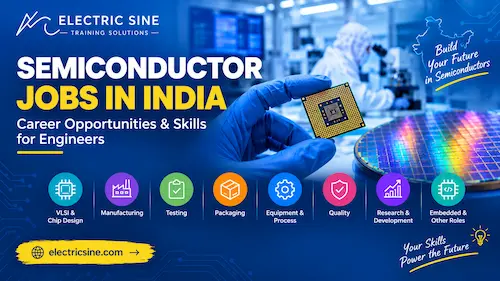
The semiconductor industry has become an increasingly important part of India's electronics and technology ecosystem. From smartphones and electric vehicles to renewable energy systems, artificial intelligence, communication networks and data centres, semiconductor devices are fundamental to modern technology.
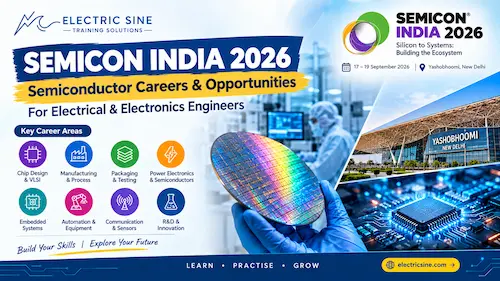
SEMICON India 2026, held from 17–19 September 2026 at Yashobhoomi, New Delhi, brought together stakeholders from across the semiconductor ecosystem under the theme “Silicon to Systems: Building the Ecosystem.” The event was jointly organised under the aegis of the India Semiconductor Mission (ISM), MeitY and SEMI.
For engineering students, the development of India's semiconductor ecosystem is particularly relevant because it creates demand for skills spanning chip design, electronics, semiconductor manufacturing, packaging, testing, power electronics, embedded systems, automation and advanced manufacturing.
What Is SEMICON India?
SEMICON India is a major semiconductor and electronics industry event that brings together companies, government organisations, researchers, academia, startups and professionals involved in the semiconductor ecosystem.
The 2026 edition focused on building a broader ecosystem extending from silicon and semiconductor manufacturing to systems and applications. The event featured industry discussions, technical sessions, exhibitions, startup activities and initiatives focused on talent development.
The 2026 event also highlighted areas including:
- Semiconductor design
- Manufacturing
- Packaging
- Electronics systems
- Components
- Materials
- Equipment
- Research and innovation
- Talent development
- Artificial intelligence
- Supply chains
- Sustainability
- Startups
This wider ecosystem means semiconductor careers are not limited to chip designers alone.
Why Is the Semiconductor Industry Important?
A semiconductor chip can contain millions or even billions of electronic components and can perform complex computational, control or communication functions.
Semiconductors are used in:
- Smartphones
- Computers
- Electric vehicles
- Industrial automation
- Consumer electronics
- Renewable energy systems
- Communication equipment
- Satellites
- Medical electronics
- Defence electronics
- Artificial intelligence systems
- Data centres
- Automotive electronics
As electronics become more integrated into everyday products, semiconductor technology becomes increasingly important across multiple engineering sectors.
India's Growing Semiconductor Ecosystem
India has been working to strengthen its semiconductor ecosystem through government programmes, industrial investments, technology development and talent initiatives.
The official SEMICON India 2026 information highlighted the development of an ecosystem covering design, manufacturing, packaging, materials, equipment, electronics systems, research, innovation and talent development.
The Government of India also reported that 12 projects had been approved under Semicon India 1.0, with three of those projects having commenced commercial production as of August 2026.
This broader ecosystem can create opportunities at different stages of the semiconductor value chain.
Semiconductor Career Opportunities for Engineering Students
Students sometimes associate semiconductor careers only with VLSI or chip design.
In reality, the semiconductor ecosystem requires professionals from multiple engineering backgrounds.
1. Semiconductor Chip Design
Chip design is one of the most technically specialised areas of the semiconductor industry.
Students interested in chip design can explore:
- Digital electronics
- Analog electronics
- VLSI
- CMOS circuits
- Digital design
- Verilog
- SystemVerilog
- RTL design
- Verification
- FPGA technology
- Electronic Design Automation (EDA)
A strong understanding of digital electronics and circuit theory can provide a foundation for learning advanced chip-design concepts.
2. VLSI and Verification
Very Large Scale Integration (VLSI) involves designing integrated circuits containing large numbers of electronic components.
Career areas can include:
- RTL design
- Functional verification
- Physical design
- Static timing analysis
- FPGA development
- ASIC design
- Design verification
Students from Electronics, ECE, Electrical and related disciplines can explore VLSI depending on their academic background and the requirements of individual employers.
3. Semiconductor Manufacturing
Manufacturing is another major part of the semiconductor ecosystem.
Semiconductor manufacturing involves highly controlled processes used to produce integrated circuits and other semiconductor devices.
Important areas include:
- Semiconductor fabrication
- Process engineering
- Wafer processing
- Cleanroom operations
- Equipment engineering
- Process control
- Yield improvement
- Quality control
- Manufacturing automation
This area can be particularly relevant to students interested in combining electronics with manufacturing and industrial technology.
4. Semiconductor Packaging and Testing
A semiconductor device needs to be packaged and tested before it can be integrated into an electronic product.
Career areas include:
- Semiconductor packaging
- Assembly
- Testing
- Failure analysis
- Quality assurance
- Reliability testing
- Test engineering
- Automated test equipment
SEMICON India 2026 specifically highlighted India's OSAT landscape and the development of the semiconductor packaging ecosystem.
OSAT stands for Outsourced Semiconductor Assembly and Test.
5. Power Electronics and Semiconductors
Power electronics is another important connection between Electrical Engineering and the semiconductor industry.
Power semiconductor devices are used in applications such as:
- Electric vehicles
- Solar power systems
- Battery systems
- Industrial drives
- Power supplies
- Data centres
- Renewable energy
- Electrical grids
Technologies such as SiC (Silicon Carbide) and GaN (Gallium Nitride) are increasingly important in advanced power electronics.
SEMICON India's 2026 advanced-electronics discussions included the development of the power-electronics value chain and the roadmap for SiC and GaN technologies.
This creates an interesting intersection between Electrical Engineering, Power Electronics and Semiconductor Technology.
6. Embedded Systems
Semiconductors are the foundation of embedded electronic systems.
Students interested in embedded systems can learn:
- Microcontrollers
- Microprocessors
- Embedded C
- C/C++
- Digital electronics
- Sensors
- Communication protocols
- Real-time systems
- PCB design
- Firmware development
Embedded engineers can work on products ranging from industrial equipment to automotive and consumer electronics.
7. Semiconductor Equipment and Automation
Semiconductor manufacturing requires specialised equipment and highly controlled processes.
Electrical and Electronics Engineers can develop skills related to:
- Industrial automation
- PLC
- Control systems
- Sensors
- Instrumentation
- Motors and drives
- Robotics
- Process monitoring
- Equipment maintenance
- Automated manufacturing
This is one area where EEE students can connect their existing electrical engineering knowledge with semiconductor manufacturing.
8. Instrumentation and Testing
Testing is critical throughout semiconductor manufacturing and electronics production.
Instrumentation engineers may work with:
- Sensors
- Measurement systems
- Data acquisition
- Automated testing
- Calibration
- Process monitoring
- Electronic test equipment
- Quality systems
Students with a background in Electrical Engineering, Electronics or Instrumentation can therefore explore semiconductor-related testing and measurement roles.
Skills Engineering Students Should Develop
The semiconductor industry is multidisciplinary, so students should focus on building both fundamental and specialised skills.
Core Electronics
- Analog Electronics
- Digital Electronics
- Electronic Devices
- Circuit Theory
- Signals and Systems
- Communication Systems
Semiconductor-Specific Skills
- VLSI
- CMOS
- Semiconductor devices
- Verilog
- SystemVerilog
- FPGA
- ASIC concepts
- EDA tools
- Semiconductor manufacturing
- Semiconductor testing
Electrical Engineering Skills
EEE students can additionally focus on:
- Power Electronics
- Control Systems
- Electrical Measurements
- Power Systems
- Industrial Automation
- Instrumentation
Programming Skills
Programming is becoming increasingly useful across engineering domains.
Students can learn:
- C
- C++
- Python
- Embedded C
- Basic scripting
The required programming skills vary according to the specific semiconductor career path.
SEMICON India 2026 and Student Opportunities
One of the notable student-focused initiatives associated with SEMICON India 2026 was its Semiconductor Hackathon.
The hackathon was open to undergraduate, postgraduate and PhD students from engineering, science and technology disciplines. Challenge areas included:
- Chip Design
- AI-enabled Semiconductor Manufacturing
- Yield Optimisation
- AI in EDA
- Advanced Verification
The initiative was designed to connect academic learning with industry-defined semiconductor problems and provide exposure to industry experts and emerging technologies.
This highlights an important trend for students: semiconductor careers increasingly require not only theoretical knowledge but also problem-solving, project experience and practical technical skills.
Career Paths in the Semiconductor Industry
Engineering students can explore different pathways depending on their interests.
| Career Area | Useful Skills |
|---|---|
| Chip Design | Digital Electronics, VLSI, Verilog |
| VLSI Verification | SystemVerilog, Verification, Digital Design |
| Semiconductor Manufacturing | Electronics, Process Engineering, Manufacturing |
| Semiconductor Testing | Electronics, Instrumentation, Testing |
| Packaging | Electronics, Materials, Manufacturing |
| Power Semiconductor | Power Electronics, Semiconductor Devices |
| Embedded Systems | C/C++, Microcontrollers, Electronics |
| Automation | PLC, Control Systems, Instrumentation |
| Equipment Engineering | Electrical, Electronics, Automation |
| EDA | VLSI, Programming, Design Tools |
| Quality & Reliability | Testing, Electronics, Data Analysis |
The exact qualifications required depend on the employer and position.
What Can EEE Students Learn From the Semiconductor Industry?
For Electrical and Electronics Engineering students, semiconductor technology provides opportunities to expand beyond traditional electrical subjects.
A student with knowledge of:
Electrical Circuits
↓
Electronics
↓
Power Electronics
↓
Control Systems
↓
Instrumentation
↓
Embedded Systems
↓
Semiconductor Technology
can develop a broader understanding of modern electronic systems.
This is especially useful because semiconductor devices are increasingly integrated into electrical systems, vehicles, renewable-energy technologies and industrial automation.
How Students Can Prepare for Semiconductor Careers
Step 1: Strengthen Fundamentals
Start with:
- Circuit Theory
- Analog Electronics
- Digital Electronics
- Semiconductor Devices
- Signals and Systems
Step 2: Choose a Specialisation
Depending on your interest, explore:
VLSI → Chip Design → Verification
or
Power Electronics → Power Semiconductors → EV/Renewable Energy
or
Instrumentation → Automation → Semiconductor Manufacturing
or
Embedded Systems → Microcontrollers → Electronics Products
Step 3: Learn Industry Tools
Students can gradually learn relevant simulation, design, programming and development tools.
Step 4: Build Projects
Practical projects can demonstrate your ability to apply engineering concepts.
Examples include:
- FPGA projects
- Microcontroller projects
- PCB design
- Power converter projects
- Sensor systems
- Digital logic projects
- Embedded systems
- Automation projects
Step 5: Practise Technical Questions
Regular practice of engineering MCQs and technical problems can help students strengthen their fundamentals.
This is also a natural place to internally link your Electrical Engineering MCQs and Mock Tests on Electric Sine.
Semiconductor Careers Are Not Only for ECE Students
The semiconductor ecosystem requires multiple engineering disciplines.
ECE / Electronics
Can explore:
- VLSI
- Chip design
- Verification
- Embedded systems
- Semiconductor testing
Electrical Engineering
Can explore:
- Power electronics
- Equipment engineering
- Automation
- Control systems
- Power semiconductor applications
Instrumentation
Can explore:
- Process control
- Sensors
- Testing
- Measurement
- Manufacturing automation
Computer Science
Can explore:
- EDA software
- Semiconductor automation
- AI applications
- Software and systems
- Data analysis
Therefore, students from different engineering backgrounds can explore semiconductor-related career paths by developing the appropriate technical skills.
Future of Semiconductor Careers in India
India's semiconductor ecosystem is developing across multiple stages, from design and manufacturing to packaging, testing, components and electronics systems.
SEMICON India 2026 brought together stakeholders across this broader ecosystem, with the event highlighting areas such as advanced electronics manufacturing, semiconductor packaging, power electronics, PCBs, talent development and startup activity.
For engineering students, this means semiconductor technology can be considered not just as a specialised electronics field, but as a broader career ecosystem involving electrical engineering, electronics, manufacturing, automation, testing, software and research.
Frequently Asked Questions
What is SEMICON India 2026?
SEMICON India 2026 was a major semiconductor and electronics industry event held from 17–19 September 2026 at Yashobhoomi, New Delhi, under the theme “Silicon to Systems: Building the Ecosystem.”
Is semiconductor engineering a good career option for EEE students?
EEE students can explore semiconductor-related areas such as power electronics, equipment engineering, automation, control, testing and manufacturing, depending on their skills and qualifications.
Can ECE students work in semiconductor companies?
Yes. ECE graduates can develop skills in areas such as VLSI, chip design, verification, embedded systems, semiconductor testing and electronics manufacturing.
What should I study to enter the semiconductor industry?
Important foundations include Digital Electronics, Analog Electronics, Electronic Devices, Circuit Theory, VLSI and semiconductor fundamentals. Depending on the career path, students can also learn programming, embedded systems, power electronics or automation.
Is VLSI the only semiconductor career?
No. Semiconductor careers can span chip design, verification, manufacturing, packaging, testing, equipment engineering, automation, power electronics, embedded systems and other areas.
Conclusion
SEMICON India 2026 highlights the expanding scope of India's semiconductor and electronics ecosystem. The industry extends far beyond chip design, covering semiconductor manufacturing, packaging, testing, power electronics, embedded systems, automation, instrumentation, equipment and electronics systems.
For Electrical and Electronics Engineering students, this creates multiple areas to explore.
The best starting point is to build strong fundamentals and then develop specialised skills according to your career interest.
Learn the fundamentals. Build practical skills. Explore semiconductor technology. Prepare for the future of electronics.
⚡ Electric Sine
Learn • Practise • Grow
Explore Electrical, Electronics and Engineering learning resources at electricsine.com.